
In my research on the design and development of evaluation and test platforms for electric vehicle battery packs, I have come to recognize that the traction battery pack is not merely a component but the central determinant of vehicle reliability, driving range, safety, and market competitiveness. As the global new energy vehicle industry expands at an unprecedented pace, the conventional battery testing platforms that I and many others have relied upon for years are increasingly unable to satisfy the diverse and demanding scenarios required by modern electric vehicle battery pack development. Consequently, integrated full-scenario test platforms have emerged as a primary research focus. In this paper, I systematically sort out the design fundamentals of evaluation and test platforms for electric vehicle battery packs, summarize domestic and international research progress, analyze the prominent challenges encountered during platform development, and prospect future developmental trends. My goal is to provide theoretical support for the optimized design of domestic evaluation and test platforms for electric vehicle battery packs.
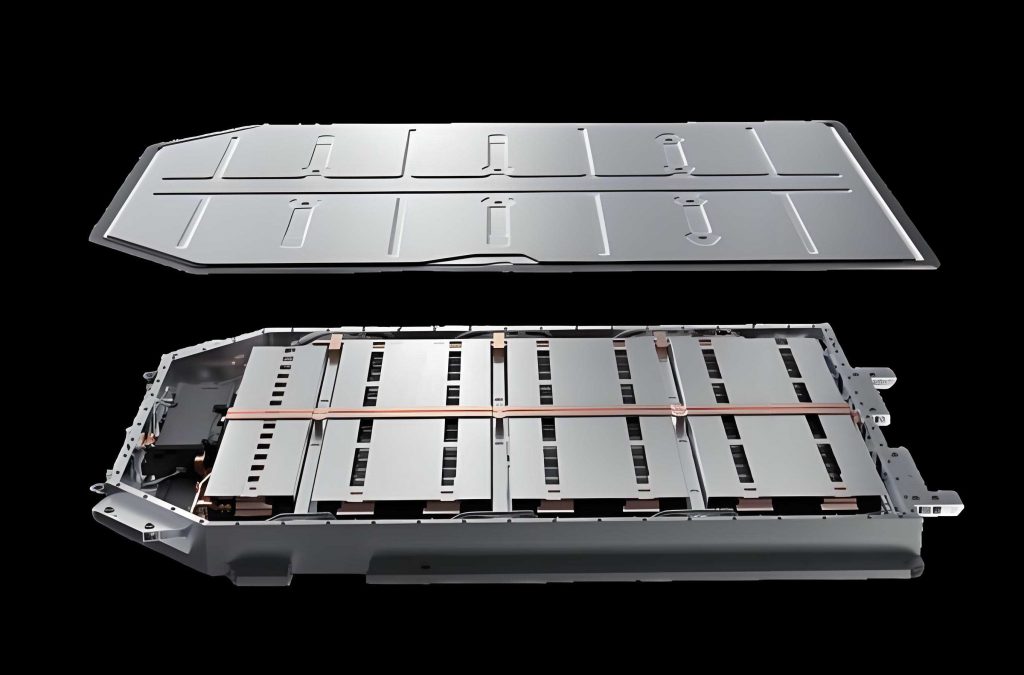
An electric vehicle battery pack typically consists of hundreds or even thousands of individual cells connected in series and parallel. Due to manufacturing limitations and varying operating environments, individual cells exhibit differences in capacity, internal resistance, self-discharge rate, and other parameters. The performance of an electric vehicle battery pack therefore displays strong coupling and nonlinear characteristics. Throughout the entire lifecycle of electric vehicle development, the battery pack faces multiple challenges including charge and discharge rate variations, extreme environmental impacts, and mechanical collisions. Once performance degradation, thermal runaway, or other faults occur, they can directly lead to reduced driving range, safety accidents, and significant economic losses. Therefore, the evaluation and test platform for electric vehicle battery packs serves as a critical carrier for quality control and performance verification.
1. Design Fundamentals of Evaluation and Test Platforms for Electric Vehicle Battery Packs
When I design an evaluation and test platform for an electric vehicle battery pack, I must consider three major categories of indicators: electrical performance, safety, and environmental adaptability. These three categories form the foundation of any comprehensive test platform. In the following sections, I elaborate on each category, present relevant formulas, and summarize the core evaluation metrics in tabular form.
1.1 Full-Lifecycle Testing Requirements and Core Evaluation Metrics
The full-lifecycle testing requirements for an electric vehicle battery pack span from cell-level characterization to pack-level system validation, from laboratory conditions to real-world driving scenarios, and from initial performance assessment to end-of-life prediction. I have found that a well-designed test platform must address the following phases: research and development testing, production quality control, type approval and certification, and in-service monitoring. Each phase imposes different demands on measurement accuracy, environmental control, data acquisition speed, and safety protection.
The core evaluation metrics for an electric vehicle battery pack can be grouped into three dimensions. The first dimension is electrical performance, which directly determines the vehicle’s driving range, power response, and fast-charging capability. Key metrics include capacity, power, rate capability, state of charge (SOC), state of health (SOH), and energy efficiency. The second dimension is safety, which revolves around the core objectives of preventing fire and explosion, preventing leakage, and preventing injury. Key metrics include thermal runaway propagation resistance, mechanical abuse tolerance, waterproof and dustproof performance, and electrical insulation. The third dimension is environmental adaptability, which refers to the stable operation capability of the electric vehicle battery pack under different geographical and climatic conditions. Key metrics include high-temperature performance, low-temperature performance, low-pressure adaptability, and humidity resistance.
To quantify these metrics, I frequently use the following fundamental formulas. The capacity of an electric vehicle battery pack is the sum of the capacities of individual cells, but due to inconsistency, the actual usable capacity is often lower:
$$ C_{pack} = \sum_{i=1}^{N} C_i $$
where \( C_{pack} \) is the total pack capacity, \( N \) is the number of cells, and \( C_i \) is the capacity of the \( i \)-th cell. However, the effective capacity is limited by the weakest cell:
$$ C_{eff} = \min_{i} C_i \times N $$
The state of charge (SOC) of an electric vehicle battery pack is defined by the coulomb counting method:
$$ SOC(t) = SOC(0) – \frac{1}{Q_{rated}} \int_0^t I(\tau) d\tau $$
where \( Q_{rated} \) is the rated capacity, and \( I(\tau) \) is the instantaneous current. The state of health (SOH) is typically expressed as the ratio of current capacity to rated capacity:
$$ SOH = \frac{Q_{current}}{Q_{rated}} \times 100\% $$
The power capability of an electric vehicle battery pack is given by:
$$ P = V \cdot I $$
where \( V \) is the terminal voltage and \( I \) is the current. The rate capability is often expressed as a C-rate:
$$ C_{rate} = \frac{I}{Q_{rated}} $$
For safety evaluation, the thermal runaway energy of an electric vehicle battery pack can be approximated by integrating the heat release rate over time:
$$ E_{TR} = \int_{t_0}^{t_f} P_{heat}(t) dt $$
where \( P_{heat}(t) \) is the heat generation power during thermal runaway, and \( t_0 \) and \( t_f \) are the start and end times of the event. The reliability of the electric vehicle battery pack under given operating conditions can be modeled using an exponential distribution:
$$ R(t) = e^{-\lambda t} $$
where \( \lambda \) is the failure rate. Measurement error is another critical metric for any test platform:
$$ \epsilon = \frac{|x_{meas} – x_{true}|}{x_{true}} \times 100\% $$
For multi-channel data acquisition, the synchronization error between channels must be minimized:
$$ \Delta t = \max_{i,j} |t_i – t_j| $$
Table 1 summarizes the core evaluation metrics, their definitions, and typical target values that I consider when designing an evaluation and test platform for an electric vehicle battery pack.
| Dimension | Metric | Definition | Typical Target |
|---|---|---|---|
| Electrical Performance | Capacity | Total charge stored in the electric vehicle battery pack | > 95% of nominal |
| Electrical Performance | Power | Product of voltage and current | Meet peak demand |
| Electrical Performance | Rate Capability | Ability to charge/discharge at high C-rates | Up to 5C for fast charging |
| Electrical Performance | SOC | Remaining charge fraction | Error < 3% |
| Electrical Performance | SOH | Capacity fade relative to rated capacity | Error < 5% |
| Safety | Thermal Runaway Resistance | Ability to prevent propagation | No fire or explosion |
| Safety | Mechanical Abuse | Crush, penetration, vibration, shock | No leakage or fire |
| Safety | Waterproof and Dustproof | IP rating | IP67 or higher |
| Environmental Adaptability | High-Temperature Performance | Operation at elevated temperatures | Up to 60 °C |
| Environmental Adaptability | Low-Temperature Performance | Operation at sub-zero temperatures | Down to -30 °C |
| Environmental Adaptability | Low-Pressure Adaptability | Operation at high altitude | Up to 5000 m |
1.2 Test Standard System
The design of an evaluation and test platform for an electric vehicle battery pack must strictly follow domestic and international standards to ensure the规范性 of test results. In my analysis, the current core standards can be divided into three categories: domestic standards, international standards, and industry specifications. For domestic standards, the GB series is central. For example, GB 38031—2025, the mandatory standard for electric vehicle traction battery safety, specifies core test requirements for thermal runaway, mechanical abuse, and electrical safety. Other industry standards and group standards refine test procedures and evaluation methods for electrical performance and environmental adaptability. For international standards, the IEC, ISO, and SAE series dominate. IEC 62660, for instance, covers test procedures for lithium-ion cells for electric vehicles, while ISO 6469 addresses safety requirements for electric road vehicles. These standards are essential for electric vehicle battery pack testing for export models. Industry specifications from organizations such as the China Automotive Technology and Research Center and the Society of Automotive Engineers of China add test requirements for off-road, heavy-load, and multi-scenario coupling conditions, thereby complementing the national standards in terms of scenario fidelity.
Table 2 compares the major standard systems that I consider when designing a test platform for an electric vehicle battery pack.
| Standard Category | Example Standard | Scope | Key Focus |
|---|---|---|---|
| Domestic (China) | GB 38031—2025 | Safety requirements for traction batteries | Thermal runaway, mechanical abuse, electrical safety |
| Domestic (China) | GB/T 31467 | Test procedures for lithium-ion battery packs | Electrical performance, cycle life |
| International | IEC 62660 | Secondary lithium-ion cells for electric vehicles | Performance and reliability testing |
| International | ISO 6469 | Electric road vehicle safety | Overall vehicle safety |
| International | SAE J2464 | Electric vehicle battery abuse testing | Mechanical, thermal, electrical abuse |
| Industry Specification | Group standards | Off-road, heavy-load, multi-scenario | Scenario-coupled testing |
2. Domestic and International Research Progress in Evaluation and Test Platforms for Electric Vehicle Battery Packs
In this section, I summarize the research progress on evaluation and test platforms for electric vehicle battery packs both domestically and internationally. I have observed that although domestic research started later, it has accelerated rapidly due to the large-scale development of the new energy vehicle industry and policy guidance. International research, on the other hand, has a longer history and has formed significant advantages in precision and intelligence.
2.1 Domestic Research Progress
Domestic research on evaluation and test platforms for electric vehicle battery packs has focused on several key areas. First, researchers have conducted in-depth studies on precise testing under high-voltage fast charging and complex operating conditions. By optimizing charge and discharge control algorithms and improving the synchronization and accuracy of multi-channel data acquisition, they have solved the problems of data distortion and large errors in traditional test platforms under high current and wide voltage ranges. This has enabled high-precision quantitative detection of key indicators such as capacity, SOC, and SOH for electric vehicle battery packs. Second, to address safety hazards and performance degradation caused by poor consistency among cells, domestic researchers have developed multi-channel parallel testing and differential analysis technology. This technology enables synchronous data acquisition and real-time analysis of hundreds of cells, providing precise technical support for battery pack grouping optimization and consistency control. Third, domestic efforts have been made to integrate test platforms with digital twins and cloud-based data management, allowing remote monitoring and predictive maintenance of electric vehicle battery packs.
I have also noted that domestic test platforms are increasingly adopting modular architectures. For example, a typical domestic platform may consist of a high-precision charge-discharge module, a multi-channel data acquisition unit, an environmental chamber, a safety monitoring system, and a central control computer. The modular design allows for flexible configuration according to the specific requirements of different electric vehicle battery pack types. However, domestic platforms still face challenges in terms of measurement accuracy, long-term stability, and compatibility with new battery chemistries.
2.2 International Research Progress
International research on evaluation and test platforms for electric vehicle battery packs began earlier and has leveraged advanced intelligent control technologies to achieve significant advantages in precision and intelligence. International efforts have consistently focused on high precision and high reliability. In terms of electrical performance testing, foreign researchers have developed high-precision charge-discharge modules, high-sensitivity sensors, and data acquisition devices that enable precise capture of micro-current and micro-voltage changes. This allows high-precision detection of electrical performance indicators of electric vehicle battery packs under ultra-wide voltage and ultra-high rate conditions, with test errors controlled at extremely low levels. For instance, some advanced platforms achieve current measurement accuracy better than 0.01% of full scale and voltage measurement accuracy better than 0.005% of full scale.
Moreover, international researchers have built multi-factor coupled battery life prediction models based on long-term test data and theoretical research. These models can accurately predict remaining useful life by combining operating conditions and environmental conditions, providing important technical support for full-lifecycle management of electric vehicle battery packs. The models often take the form:
$$ L = f(T, SOC, C_{rate}, DOD, \sigma_{mech}, …) $$
where \( L \) is the remaining useful life, \( T \) is temperature, \( SOC \) is state of charge, \( C_{rate} \) is the charge/discharge rate, \( DOD \) is depth of discharge, and \( \sigma_{mech} \) represents mechanical stress. International platforms also place strong emphasis on safety testing, with advanced calorimetry, accelerated rate calorimetry (ARC), and abuse testing equipment capable of characterizing thermal runaway behavior of electric vehicle battery packs under various conditions.
2.3 Comparative Analysis
Table 3 presents a comparative analysis of domestic and international research progress on evaluation and test platforms for electric vehicle battery packs. I have synthesized this table based on my review of the literature and my own experience.
| Aspect | Domestic Progress | International Progress |
|---|---|---|
| Start Time | Relatively late, accelerated by industry growth | Early start, long-term accumulation |
| Precision | Improving, but still behind in ultra-high precision | Leading in micro-current and micro-voltage measurement |
| Multi-Channel Capability | Strong in parallel testing of hundreds of cells | Strong in high-speed synchronized acquisition |
| Life Prediction | Developing, with focus on data-driven methods | Mature multi-factor coupled models |
| Safety Testing | Comprehensive, following GB standards | Advanced abuse testing and calorimetry |
| Intelligence | Rapid integration of digital twins and cloud | Advanced AI and machine learning |
| Core Components | High dependence on imports for high-precision modules | Self-sufficient in key components |
3. Challenges in the Design of Evaluation and Test Platforms for Electric Vehicle Battery Packs
Despite significant progress, I have identified several prominent challenges that hinder the design and development of advanced evaluation and test platforms for electric vehicle battery packs. These challenges must be addressed to ensure that test platforms can keep pace with the rapid evolution of electric vehicle battery pack technologies.
3.1 Testing Technology Lagging Behind Research and Development
An electric vehicle battery pack typically consists of multiple battery cells, often using lithium-ion batteries or solid-state batteries as chemical energy storage technologies. With continuous technological advances, electric vehicle battery pack technology is rapidly moving toward new systems such as solid-state batteries, sodium-ion batteries, and cobalt-free batteries. These new battery systems differ significantly from traditional lithium-ion batteries in terms of materials, electrochemical characteristics, and failure mechanisms. As a result, they impose more stringent requirements on test accuracy and safety protection for evaluation and test platforms. However, existing test technologies and methods are still based on traditional lithium-ion batteries and lack specialized test technologies and equipment for new battery systems. Therefore, I find that current platforms cannot achieve accurate evaluation of the performance of new electric vehicle battery packs. For example, solid-state batteries may operate at higher voltages and have different thermal runaway characteristics, requiring new sensor designs, new safety protocols, and new test algorithms.
To quantify the lag, I can define a technology gap index:
$$ G = \frac{T_{required} – T_{available}}{T_{required}} \times 100\% $$
where \( T_{required} \) is the required test capability for a new electric vehicle battery pack, and \( T_{available} \) is the capability of existing platforms. For solid-state batteries, this gap can exceed 40% in terms of voltage range and thermal management.
3.2 Low Localization Rate of Core Components
Although domestic companies have achieved independent research and development of core hardware and software for test platforms, they remain highly dependent on imports for high-precision charge-discharge modules, core chips, and other key components. These core components have high technical barriers, and the independent research and development capabilities of domestic enterprises are relatively insufficient. A low localization rate of core components leads to an increasing performance gap between domestic test platforms and high-end foreign products. It also significantly increases the research and development and production costs of test platforms, severely restricting the industrialization of domestic high-end test platforms for electric vehicle battery packs.
I can express the cost impact using a simple model:
$$ C_{total} = C_{domestic} + C_{import} \times (1 + \tau) $$
where \( C_{total} \) is the total cost, \( C_{domestic} \) is the cost of domestically produced components, \( C_{import} \) is the cost of imported components, and \( \tau \) is the tariff and logistics multiplier. When the localization rate is low, \( C_{import} \) dominates, and \( C_{total} \) increases substantially. Moreover, reliance on imports creates supply chain risks and limits the customization of test platforms for specific electric vehicle battery pack requirements.
3.3 Additional Challenges
Beyond the two major challenges above, I have also identified other obstacles. These include the high cost of building and maintaining full-scenario test platforms, the complexity of integrating multi-physics testing (electrical, thermal, mechanical, and chemical), the need for large-scale data management and cybersecurity, and the lack of standardized test protocols for emerging scenarios such as extreme fast charging and vehicle-to-grid interaction. Table 4 summarizes these challenges and potential strategies.
| Challenge | Description | Potential Strategy |
|---|---|---|
| Technology Lag | Existing tests for traditional lithium-ion cells cannot accurately evaluate new battery systems | Develop dedicated test methods and equipment for solid-state, sodium-ion, and cobalt-free batteries |
| Low Localization | High-precision modules and chips are imported | Increase R&D investment, promote industry-academia-research collaboration |
| High Cost | Full-scenario platforms require expensive environmental chambers and safety systems | Adopt modular design, shared testing facilities, and cloud-based resource sharing |
| Multi-Physics Integration | Coupling of electrical, thermal, mechanical, and chemical effects | Develop multi-physics co-simulation and coordinated control |
| Data Management | Large volumes of test data require secure storage and analysis | Implement big data platforms, edge computing, and cybersecurity protocols |
| Standardization | Lack of protocols for emerging scenarios | Participate in international standard-setting, develop group standards |
4. Future Development Trends of Evaluation and Test Platforms for Electric Vehicle Battery Packs
Based on my analysis of current challenges and technological trajectories, I foresee several key development trends for evaluation and test platforms for electric vehicle battery packs. These trends will shape the next generation of test platforms and enable more accurate, efficient, and comprehensive evaluation of electric vehicle battery packs.
4.1 Adaptation to New Battery Systems
To meet the research and industrialization needs of new battery systems such as solid-state batteries, sodium-ion batteries, and cobalt-free batteries, future test platforms will move toward adaptation for new battery systems. I expect that platforms will optimize hardware architecture and software algorithms to accommodate the high voltage, high energy density, and special electrochemical characteristics of new batteries. Dedicated charge-discharge test systems, safety test equipment, and multi-physics co-simulation systems for new batteries will be developed. Moreover, a test indicator system for new battery systems will be constructed to achieve comprehensive and accurate evaluation of new electric vehicle battery pack performance, thereby promoting the research and industrialization of new power batteries.
For instance, the voltage range of solid-state batteries may exceed 1000 V, requiring new insulation designs and high-voltage measurement techniques. The thermal runaway onset temperature may be higher, but the propagation behavior may be different, requiring new calorimetry and propagation test methods. I can model the adaptation requirement as:
$$ A = \frac{V_{max,new} – V_{max,old}}{V_{max,old}} \times 100\% $$
where \( A \) is the adaptation factor, and \( V_{max} \) is the maximum voltage. For solid-state batteries, \( A \) can be as high as 50% or more, demanding significant upgrades to test platform hardware.
4.2 Full-Scenario High-Precision Simulation
To match the complex actual operating scenarios of electric vehicles, future test platforms will move toward full-scenario high-precision simulation. I believe that platforms will further improve the scenario library and enhance the accuracy and comprehensiveness of scenario simulation. Based on more big data from actual electric vehicle operation, platforms will mine key parameters of more complex scenarios, add special environmental scenarios such as polar regions, deserts, and extreme rainstorms, as well as special working conditions such as extreme fast charging, heavy-load climbing, and continuous braking. At the same time, the accuracy of scenario coupling simulation will be improved to achieve multi-dimensional and multi-variable precise coupling, truly reproducing the operating state of an electric vehicle battery pack under complex actual scenarios, and ensuring that test results are highly consistent with actual operation.
The scenario coupling can be expressed as a multi-input model:
$$ S_{test} = \alpha T + \beta v + \gamma I + \delta H + \epsilon R + … $$
where \( T \) is temperature, \( v \) is vehicle speed, \( I \) is current, \( H \) is humidity, \( R \) is road slope, and \( \alpha, \beta, \gamma, \delta, \epsilon \) are weighting coefficients. The goal is to minimize the difference between the test scenario and the real-world scenario:
$$ \min \| S_{test} – S_{real} \| $$
4.3 Intelligence and Digitalization
I also anticipate that future evaluation and test platforms for electric vehicle battery packs will become increasingly intelligent and digitalized. Artificial intelligence and machine learning will be used for anomaly detection, predictive maintenance, and adaptive test control. Digital twins of electric vehicle battery packs will be created to simulate performance under various conditions and to optimize test plans. Cloud-based platforms will enable remote access, data sharing, and collaborative research. Edge computing will allow real-time data processing and reduce latency. Cybersecurity will become a critical concern as test platforms become more connected.
The intelligence level can be quantified by the degree of automation and the use of AI algorithms:
$$ I_{intel} = w_1 A_{auto} + w_2 A_{AI} + w_3 A_{cloud} $$
where \( A_{auto} \) is the automation level, \( A_{AI} \) is the AI adoption level, \( A_{cloud} \) is the cloud integration level, and \( w_1, w_2, w_3 \) are weights.
4.4 Standardization and Globalization
Finally, I expect that standardization and globalization will continue to drive the development of evaluation and test platforms for electric vehicle battery packs. International standards will be updated to cover new battery systems and new test scenarios. Domestic standards will be harmonized with international standards to facilitate global trade. Test results will be mutually recognized across borders. This will require close collaboration among standards organizations, industry associations, research institutions, and manufacturers. I believe that a unified global framework for electric vehicle battery pack testing will emerge, enabling fair competition and accelerating innovation.
Table 5 summarizes the future development trends and their expected impacts.
| Trend | Key Features | Expected Impact |
|---|---|---|
| New Battery System Adaptation | Dedicated test methods for solid-state, sodium-ion, cobalt-free batteries | Accelerates industrialization of new electric vehicle battery packs |
| Full-Scenario High-Precision Simulation | Multi-dimensional scenario coupling, extreme conditions | Improves correlation between test and real-world performance |
| Intelligence and Digitalization | AI, digital twins, cloud, edge computing, cybersecurity | Enhances efficiency, predictive capability, and data security |
| Standardization and Globalization | Harmonized international standards, mutual recognition | Facilitates global market access and technology sharing |
5. Conclusion
In this paper, I have systematically reviewed the design and development of evaluation and test platforms for electric vehicle battery packs from four perspectives: design fundamentals, research and application progress, challenges, and development trends. I have found that both domestic and international efforts have formed a complete system from basic research to industrial application, and the gap between domestic and international technologies is continuously narrowing. However, current test platform design still faces a series of challenges, including lagging test technology for new battery systems and a low localization rate of core components. Future research should focus on dedicated test technologies for new battery systems and full-scenario high-precision simulation, promote continuous breakthroughs in core technologies of test platforms, and enhance the industrialization effect of domestic test platforms for electric vehicle battery packs.
I am confident that with continued innovation, the next generation of evaluation and test platforms for electric vehicle battery packs will be more precise, intelligent, and comprehensive, providing robust support for the safe, reliable, and efficient operation of electric vehicles worldwide. The electric vehicle battery pack will remain the heart of the electric vehicle, and the test platform will be the guardian of its quality and performance.