
On August 28, the Liuhe Circular Economy Industrial Park opened, and inside a clean workshop with a green epoxy floor, a battery assembly line more than 100 meters long began trial operation. At the starting point of the line, workers fed blue square cells into automatic sorting equipment. In the middle section, behind the green observation window of a laser cleaning machine, a faint light flashed and the screen displayed “OK.” At the end of the line, a lifting tool rose slowly and a blue-black power battery module settled steadily onto the conveyor table. Not far away, workers bent over to embed circuit boards into white shells and gathered red and black wiring harnesses before plugging them into place. The “second life” of retired power battery products was being lit up again through this series of precise actions.
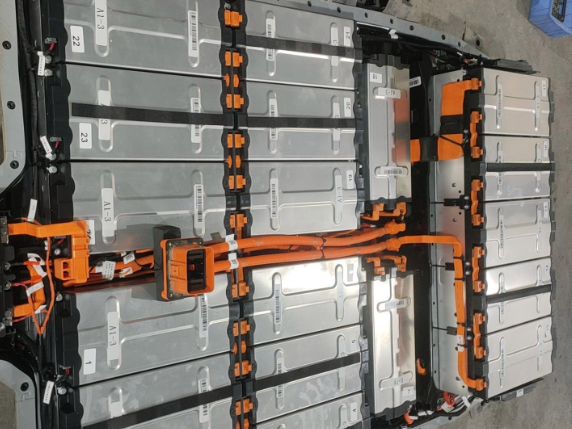
The facility is the retired power battery comprehensive utilization project invested and built by Nanjing Public Ganfeng Circular Technology Co., Ltd., a company under Nanjing Municipal Urban Construction Group. It is also Nanjing’s first planned retired power battery comprehensive utilization base with an annual processing scale of 100,000 tonnes. On the opening day, Phase 1 of the project, with an annual processing capacity of 30,000 tonnes, was completed and entered trial production. The small household energy storage products produced by the project will be sold to Nigeria, Australia and other countries, marking a concrete step in the development of a power battery circular economy in Nanjing and the wider Yangtze River Delta region.
- Trial production puts a planned 100,000-tonne power battery utilization base on the map
The project occupies 73 mu and has a total planned annual processing capacity of 100,000 tonnes of retired power battery materials. It is being implemented in two phases. Phase 1, with 30,000 tonnes of annual processing capacity, has been completed and is now in trial production. Phase 2 will add 70,000 tonnes of annual processing capacity. The project is located in the Liuhe Circular Economy Industrial Park, which was selected as a Nanjing major project in 2025. Nanjing Public Ganfeng is the first industrial project to move into the park and start production.
The trial production of the first phase gives Nanjing a new industrial node for retired power battery utilization. The project is not simply a collection point or a dismantling workshop. It combines battery pack dismantling, battery assembly and material regeneration in one industrial chain. For Nanjing, the project adds a scaled processing link to the local retired power battery recycling network. For the Yangtze River Delta region, it adds a capacity support point for compliant disposal of retired power battery products. For the company, it is an important step in moving from a traditional urban construction and investment platform toward a green industry investor.
Inside the Phase 1 workshop, the project has equipped a battery pack dismantling line, a battery assembly production line and an all-electric crushing line. The production process runs from cell sorting and polarity testing to laser cleaning and automatic welding, and then to module stacking and shell packaging. Each link is connected with the next, and workers in dark blue uniforms carry out operations in an orderly manner at their stations. The workshop is designed around a continuous production flow for retired power battery utilization, allowing different lines to work together and support both resource regeneration and product remanufacturing.
The project’s route is described as “recombination and reuse plus material regeneration.” Retired power battery products that are still in usable condition are recombined into energy storage products and continue to serve in new applications. Retired power battery products with serious degradation enter the crushing line, where lithium, cobalt, nickel and other key metals are extracted. In the words of the project operator, the approach is to recombine what can be recombined, recover what cannot be recombined, and make the fullest use of every retired power battery. This two-track model gives the project a broader industrial role than a single recycling line.
| Item | Data |
|---|---|
| Project | Nanjing Public Ganfeng retired power battery comprehensive utilization project |
| Location | Liuhe Circular Economy Industrial Park, Nanjing |
| Project land area | 73 mu |
| Total planned annual processing capacity | 100,000 tonnes of retired power battery materials |
| Phase 1 | 30,000 tonnes per year, completed and in trial production |
| Phase 2 | Additional 70,000 tonnes per year |
| Park planned land area | 50 hectares |
| Household storage orders | 2 orders totaling about RMB 18.60 million |
| Household storage product specification | 8 kWh |
| Ownership structure | Nanjing Public 40%, Nanjing Environment Group 20%, Jiangxi Ganfeng New Energy 40% |
| Nanjing retired battery collection points | 147 by the end of 2024, nearly 15% of Jiangsu Province’s total |
| Nanjing new energy vehicle ownership | 592,700 by the end of 2025, with 181,000 added during 2025 |
| Domestic retired power battery comprehensive utilization | More than 400,000 tonnes in 2025, up 32.9% year on year |
| Industry forecast for 2030 | Retired power battery generation may exceed 1,000,000 tonnes |
- Retired power battery volumes are rising and processing capacity needs strengthening
The project comes at a time when retired power battery volumes are rising quickly. China’s new energy vehicle industry has developed for many years, and power battery products from early vehicle models are now retiring in batches. A power battery is a power source for electric vehicles, electric trains, electric ships and other applications, and the current market is mainly based on lithium batteries. As the first wave of vehicle power battery products reaches the end of its service life, the need for standardized collection, safe dismantling, recombination and material regeneration is becoming more urgent.
Data from the Ministry of Industry and Information Technology shows that domestic comprehensive utilization of retired power battery materials exceeded 400,000 tonnes in 2025, up 32.9% year on year. Industry forecasts suggest that by 2030, China’s retired power battery generation may exceed 1,000,000 tonnes. These figures point to a dual challenge and opportunity. The challenge is that retired power battery products must be handled through compliant channels to avoid safety and environmental risks. The opportunity is that a well-developed power battery circular economy can recover valuable materials and extend the service life of usable products.
Nanjing is part of this national trend. By the end of 2025, Nanjing’s new energy vehicle ownership reached 592,700, with 181,000 vehicles added during the year. The growth of new energy vehicles creates a corresponding growth in retired power battery volumes after several years of use. A local recycling network has already been established. By the end of 2024, Nanjing had built 147 retired battery collection points, accounting for nearly 15% of Jiangsu Province’s total. This network provides a foundation for collecting retired power battery products and directing them toward compliant utilization.
However, collection alone is not enough. Some local recycling and utilization projects have been approved for construction, but full-chain large-scale comprehensive disposal capacity with dismantling and material regeneration capabilities is still insufficient. Compared with the rapidly growing demand for retired power battery disposal, there is a gap in local capacity. The new project is positioned to help fill that gap by combining collection, dismantling, recombination, assembly and material regeneration in a single scaled base.
The location of the project reflects this logic. The Liuhe Circular Economy Industrial Park is Nanjing’s only professional park positioned around the circular economy. The park has a planned land area of 50 hectares and has already clustered projects including household waste incineration power generation, organic waste disposal and retired power battery comprehensive utilization. The gradual emergence of industrial synergy provides shared infrastructure, management experience and industrial coordination for the power battery project. For a retired power battery utilization base, such an industrial environment can support safer and more efficient operations.
The project is also significant because it addresses the full-chain problem. A retired power battery cannot simply be shredded and sold as scrap if the goal is high-value utilization. It must first be assessed, sorted and safely dismantled. Usable modules can be recombined into energy storage products, while degraded materials can enter material regeneration. This full-chain approach requires equipment, technical processes, quality control and market channels. The trial production of Phase 1 shows that these links are being brought together in one industrial site.
- A dual-track model turns retired power battery products into storage products and recovered materials
Unlike traditional recycling enterprises that begin with crushing and smelting, the Nanjing project follows a parallel route of recombination and reuse plus material regeneration. This route is central to the project’s understanding of retired power battery value. A retired power battery that can still be used should not be treated only as scrap material. If its condition is suitable, it can be recombined into energy storage products and continue to provide value in household, commercial or other applications. A retired power battery that has seriously degraded should be sent to material regeneration, where lithium, cobalt, nickel and other key metals are extracted.
The Phase 1 workshop reflects this dual-track model. The battery pack dismantling line allows retired power battery packs to be opened, inspected and separated. The battery assembly production line supports cell sorting, polarity testing, laser cleaning, automatic welding, module stacking and shell packaging. The all-electric crushing line provides a route for retired power battery materials that cannot be reused. Multiple production lines coordinate their work, enabling a two-way flow between resource regeneration and product remanufacturing.
At the starting point of the assembly line, workers feed blue square cells into automatic sorting equipment. The sorting step is important for retired power battery utilization because cells may come from different sources and may have different conditions. Polarity testing and other checks help determine whether cells can be used safely in new assemblies. In the middle section, the laser cleaning machine works behind a green observation window. When the screen displays “OK,” it indicates that a process step has met the required condition. At the end of the line, a lifting tool raises and places a blue-black power battery module onto the conveyor table.
Nearby, workers embed circuit boards into white shells and gather red and black wiring harnesses before plugging them into place. These actions show that the project is not only recovering materials but also building products. The small household energy storage products produced by the project are designed for practical use. The 8 kWh specification is described as a household version of a large-capacity power bank. It can supply power for home appliances and lighting and is suitable for overseas regions where the grid is weak or incomplete. It addresses pain points such as unstable power supply, off-grid electricity use, power shortages and load restrictions.
This product orientation gives the power battery project a market-facing dimension. Recombined retired power battery products can enter household energy storage applications, while materials that cannot be reused can enter the regeneration route. The dual-track model therefore supports both product output and material recovery. It also helps the project manage different qualities of retired power battery input. Instead of forcing every retired power battery into one route, the project can direct each batch to the appropriate process based on condition and safety requirements.
The trial production stage is focused on ramping up the production line and ensuring stable operation. The project has already built storage product delivery capability. Feng Yi, chairman of Nanjing Public Ganfeng Circular Technology Co., Ltd., said that multiple production lines coordinate their division of labor and realize a two-way flow between resource regeneration and product remanufacturing. This statement highlights the project’s operating model: retired power battery utilization is treated as an integrated industrial chain rather than a single processing step.
The “rebirth” of a retired power battery in this project can follow different paths. A usable power battery module may be inspected, sorted, cleaned, welded, stacked and packaged into a new energy storage product. A degraded power battery may be dismantled and sent to the crushing line for material recovery. Both paths require safety management, quality control and traceability. The project’s ability to handle both paths in one base is important for the efficient use of retired power battery resources and for reducing the risk of improper disposal.
- Orders ahead of production point to overseas demand for household power battery storage
Orders have run ahead of production. The company has signed two small household storage equipment orders totaling about RMB 18.60 million, and the products are directed to overseas markets. This is a notable signal for a project still in trial production. It suggests that the market for small household energy storage products made from recombined retired power battery materials is already present, especially in regions where grid conditions are weak or incomplete.
The 8 kWh household storage product is described as a household version of a large-capacity power bank. It can provide power for home appliances and lighting. In overseas areas with weak or incomplete grid construction, such a product can help address unstable power supply, off-grid electricity use, power shortages and load restrictions. For users in these regions, a compact household storage product can provide a practical backup solution. For the project, this application creates a market outlet for recombined retired power battery products.
The overseas orientation also shows how a retired power battery project can connect local processing capacity with global demand. The products are not limited to the local market. Small household storage products can be exported to Nigeria, Australia and other countries. This export dimension can help the project balance production and market development as capacity is released. It also places the Nanjing project within a broader international market for household energy storage and power battery utilization.
At the same time, the order value and product specification should be viewed in the context of trial production. The project is in a ramp-up stage, and the first orders demonstrate delivery capability. The company has not disclosed additional order volumes beyond the two orders mentioned. The focus at this stage is on stable production, quality control and market verification. As the production line matures, the project can further integrate recombination, assembly and material regeneration into a stable operating system for retired power battery utilization.
The market demand for household storage products also connects with the core logic of the power battery circular economy. A retired power battery still retains capacity and materials. If it can be safely recombined into a storage product, its service life can be extended. If it cannot be reused, its materials can be recovered. Both routes reduce waste and improve resource efficiency. The project’s dual-track model therefore supports a more complete value chain for retired power battery products, from collection and assessment to product output and material recovery.
- Park synergy and city investment transformation support the power battery circular economy
The project’s location in the Liuhe Circular Economy Industrial Park is not accidental. As Nanjing’s only professional park positioned around the circular economy, the park has a planned land area of 50 hectares. It has already clustered household waste incineration power generation, organic waste disposal and retired power battery comprehensive utilization projects. The gradual emergence of industrial synergy can support the project’s operations and help the park build a more integrated circular economy cluster.
For Nanjing Municipal Urban Construction Group, the project is an important carrier for enterprise transformation. Nanjing Public Ganfeng was jointly established by Nanjing Public and Nanjing Environment Group under Nanjing Municipal Urban Construction Group and Jiangxi Ganfeng New Energy. The ownership structure is 40% for Nanjing Public, 20% for Nanjing Environment Group and 40% for Jiangxi Ganfeng New Energy. This joint venture structure brings together local urban construction and environmental service resources with power battery industry experience.
A representative of Nanjing Municipal Urban Construction Group said that the group is relying on Nanjing Public and Nanjing Environment Group to jointly invest in and lay out the new energy circular industry. This marks the group’s acceleration from a traditional urban construction and investment platform toward an industrial investment entity. It is described as a concrete practice in implementing the municipal strategy of strengthening the city through industry and deepening market-oriented transformation. It is also an important measure for Nanjing to implement its dual carbon goals and promote waste-free city construction.
From a city builder to a green industry investor, the group’s role is changing. The retired power battery project is not only an industrial investment but also a local infrastructure and environmental service initiative. It helps fill the local recycling shortfall and adds a capacity support point for compliant disposal of retired power battery products in the Yangtze River Delta. This combination of industrial investment and public service objectives gives the project a broader significance for Nanjing’s green transition.
The park’s circular economy positioning also supports the project’s resource flows. Household waste incineration power generation, organic waste disposal and retired power battery utilization may not share the same production line, but they can share park-level infrastructure, environmental management systems and industrial coordination. For a retired power battery base, this kind of park environment can help improve safety management and resource efficiency. It can also make the park more attractive to related circular economy projects and support the formation of an industrial cluster.
For Nanjing, the project adds a missing link in the local power battery recycling chain. The city already has a large new energy vehicle fleet and a broad retired battery collection network. What it needs is scaled comprehensive disposal capacity that can handle retired power battery products safely and efficiently. The new project provides this capacity in Phase 1 and prepares for further expansion in Phase 2. As a result, the local power battery circular economy can move from collection toward full-chain utilization.
- Regional capacity and future outlook for retired power battery utilization
The project’s planned annual processing capacity of 100,000 tonnes makes it a significant power battery utilization base in Nanjing. Its Phase 1 capacity of 30,000 tonnes is already in trial production, and Phase 2 is expected to add 70,000 tonnes. As capacity is gradually released, the project can process more retired power battery products through both recombination and material regeneration. This will support the local new energy vehicle industry by providing a compliant end-of-life solution for power battery products.
For the Yangtze River Delta region, the project adds a capacity support point for compliant disposal of retired power battery products. The region has a large new energy vehicle market and a strong manufacturing base. As more early-generation new energy vehicles reach the end of their service life, the demand for retired power battery utilization will continue to grow. A scaled comprehensive utilization base in Nanjing can help absorb part of this flow and support regional cooperation in power battery recycling.
The project also demonstrates how a power battery circular economy can create industrial value. Recombined products can serve household energy storage markets at home and abroad. Regenerated materials can return to the supply chain for new battery production and other applications. The dual-track model allows the project to capture value from different types of retired power battery products. It also helps reduce the environmental burden of improper disposal and supports the development of a more circular economy.
In the clean workshop, another power battery module is slowly sent into the assembly line. With the full release of project capacity, more retired power battery products will complete their “rebirth” in Nanjing. Some will become household energy storage products for overseas markets. Some will be dismantled and processed for material recovery. Together, these routes form a practical model for retired power battery comprehensive utilization. The project shows that the power battery circular economy is moving from planning to production, from collection to full-chain utilization and from local processing to broader market application.
The next stage will depend on stable trial production, quality control and market delivery. The project has already signed two household storage orders and has built storage product delivery capability. As the production line ramps up, the project can further integrate its battery pack dismantling line, battery assembly line and all-electric crushing line. This integration is essential for a power battery utilization base that aims to handle different types of retired power battery products safely and efficiently.
For Nanjing, the project is a concrete addition to the local power battery recycling network. It builds on the city’s 147 retired battery collection points and its growing new energy vehicle fleet. It also supports the city’s dual carbon goals and waste-free city construction. For the company, it is a step in the transformation from a traditional urban construction and investment platform to a green industry investor. For the power battery industry, it is an example of how recombination and material regeneration can be combined in one scaled base.
As the Liuhe Circular Economy Industrial Park continues to develop, the retired power battery project will be part of a wider circular economy cluster. The park’s existing projects in household waste incineration power generation and organic waste disposal provide a broader context for industrial synergy. The power battery project adds a new stream of retired industrial products to this cluster. Its success will depend on safe operation, efficient processing and stable market demand, but its trial production marks an important beginning for retired power battery utilization in Nanjing.
The “rebirth” of a retired power battery is not a single event. It is a chain of assessment, sorting, dismantling, recombination, assembly, testing and, where necessary, material regeneration. The Nanjing project brings these steps together in a planned 100,000-tonne-class base. With Phase 1 in trial production and Phase 2 planned, the project is positioned to grow with the increasing volume of retired power battery products. As more power battery products reach the end of their first service life, facilities like this will play a growing role in the transition toward a circular and low-carbon energy system.