
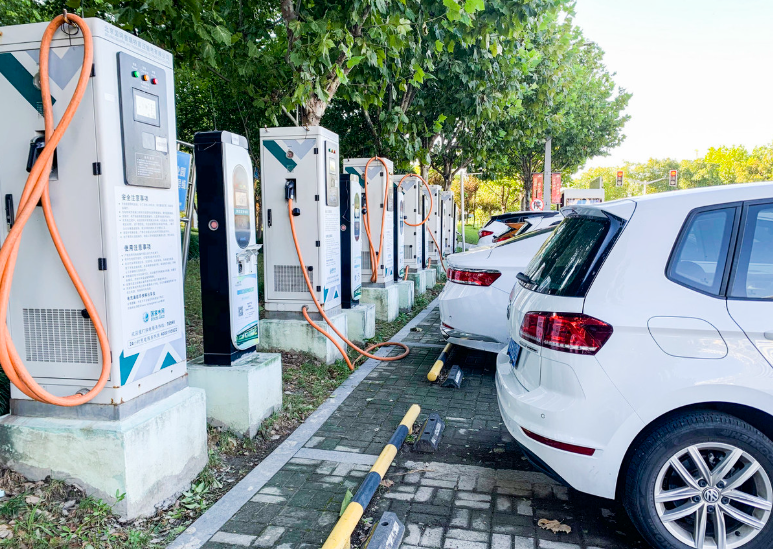
I begin with the operational reality of modern electric vehicle charging. As electric vehicle charging demand rises, high-power direct-current electric vehicle charging piles are being deployed at a rapid pace, and the charging module inside such equipment is increasingly expected to deliver high efficiency, low current ripple, and long service life. In many electric vehicle charging architectures, the LLC resonant converter is a preferred topology because it provides soft switching, galvanic isolation, and a favorable trade-off between power density and efficiency. My work focuses on the reliability bottleneck that appears when this topology operates for long periods under high frequency, high voltage, and high current stress. Among the components that age, capacitors are especially important because they are numerous, stress-sensitive, and directly coupled to the resonant behavior of the electric vehicle charging module. Capacitance loss and equivalent series resistance increase shift the resonant point, redistribute current stress, and intensify output ripple, which in turn affects the efficiency and stability of the entire electric vehicle charging process.
The central problem I address is not simply whether a capacitor has degraded, but how to identify the aging state of capacitors in an electric vehicle charging LLC resonant circuit without adding intrusive measurement circuits. In-field electric vehicle charging equipment already produces abundant voltage and current signals. My premise is that these existing signals contain enough information to characterize capacitor aging if they are processed with a multi-scale feature extraction strategy and a diagnostic model that balances accuracy and complexity. I therefore combine power spectral density analysis, wavelet packet energy entropy, nonlinear dimensionality reduction, and a multi-objective optimized support vector machine. The resulting method is intended for condition monitoring and maintenance decision-making in electric vehicle charging infrastructure.
Capacitor aging mechanisms in electric vehicle charging modules. In an electric field, a ceramic dielectric stores energy through polarization, while internal conduction and non-ideal polarization produce dissipation. Under direct-current conditions, the power loss density can be written as
$$P_{\mathrm{dc}} = \sigma^2 E^2$$
where σ is the conductivity of the dielectric material and E is the applied direct-current electric field strength. Under alternating-current conditions, the dielectric loss is dominated by polarization relaxation lag and ionic migration conduction. I express this loss as
$$P_{\mathrm{ac}} = \omega \varepsilon_0 \varepsilon_r E_{\mathrm{ac}}^2 \tan\delta$$
where ω is the angular frequency, ε0 is the vacuum permittivity, εr is the relative permittivity of the ceramic material, Eac is the alternating electric field strength, and tanδ is the loss tangent. This expression shows that dielectric loss depends on frequency. As frequency increases, the loss increases, and the capacitor is subjected to greater thermal and electrical stress during electric vehicle charging. In an LLC resonant converter, a decrease in resonant capacitance Cr increases the characteristic impedance, reduces the resonant current, and shifts the resonant frequency. These effects are directly relevant to electric vehicle charging because the charging module must remain stable over a wide output range and under repeated electric vehicle charging cycles.
For the resonant tank, the ideal resonant frequency can be approximated as
$$f_r = \frac{1}{2\pi\sqrt{L_r C_r}}$$
where Lr is the resonant inductance and Cr is the resonant capacitance. When Cr decreases because of aging, fr moves upward. The current waveform then changes in amplitude and phase, and the soft-switching condition of the electric vehicle charging converter can be disturbed. I use this relationship as the physical basis for interpreting the frequency-domain features extracted from electric vehicle charging voltage and current signals.
For aluminum electrolytic capacitors, which are often used in the output filter of electric vehicle charging modules, the non-ideal behavior is more pronounced. A simplified model includes the ideal capacitance Cak, the parallel leakage resistance Rp, the dielectric PN-junction effect, the series equivalent resistance Rs, and the equivalent series inductance Ls. The ideal capacitance can be expressed as
$$C_{\mathrm{ak}} = 8.854 \times 10^{-12}\frac{\varepsilon S}{e}$$
where ε is the dielectric coefficient, S is the effective plate area, and e is the dielectric layer thickness. The total impedance is
$$Z = R_s + j2\pi f L_s + \frac{1}{j2\pi f C_{\mathrm{ak}} + 1/R_p}$$
This impedance is frequency dependent. Below the self-resonant frequency, the capacitor is mainly capacitive; near resonance, the impedance reaches a minimum; above resonance, the inductive term becomes dominant. Because Ls is usually small, I represent the aluminum electrolytic capacitor by a series combination of capacitance C and equivalent series resistance ESR for aging diagnosis. In electric vehicle charging applications, both capacitance loss and ESR increase are important because they weaken filtering, increase ripple, and reduce the ability of the capacitor to suppress high-frequency noise.
I summarize the main aging mechanisms and their observable effects in the following table. The table is written from the perspective of electric vehicle charging operation, where capacitor aging is not an isolated component issue but a system-level reliability issue.
| Aging mechanism | Physical origin | Observable effect in electric vehicle charging | Feature implication |
|---|---|---|---|
| Capacitance loss | Dielectric degradation, electrode interface change, electrolyte loss | Resonant frequency shift, reduced resonant current, altered charging current envelope | PSD peak movement, wavelet sub-band energy redistribution |
| ESR increase | Electrolyte conductivity decrease, contact resistance increase, foil degradation | Higher ripple, greater heat, weaker high-frequency suppression | High-frequency PSD elevation, entropy increase |
| Loss tangent increase | Polarization lag and conduction loss | Higher dielectric loss, thermal stress, efficiency reduction | Frequency-dependent energy concentration |
| Equivalent inductance effect | Lead and connection geometry | High-frequency impedance change | Minor but non-negligible spectral distortion |
| Multi-component coupling | Resonant capacitor and output filter capacitor aging together | Ambiguous current and voltage patterns | Need for multi-scale and nonlinear feature reduction |
Simulated aging states and signal behavior. I simulate capacitor aging by changing the resonant capacitance and the output filter capacitance, and by changing the ESR of the output filter capacitor. The rest of the electric vehicle charging circuit parameters and control strategy are kept unchanged. In the LLC stage, different Cr values represent different aging degrees of the resonant capacitor. In the output filter, different C0 and ESR values represent different aging degrees of the output capacitor. I collect 5,000 sampling points in the same time interval and obtain the charging current and voltage on the battery side of the electric vehicle charging circuit. The aging state set contains 26 classes: one healthy state and 25 combined aging states. The combined states cover five resonant capacitor aging levels and five output filter capacitor aging levels. This design allows me to examine not only single-component degradation but also the coupled aging behavior that is common in electric vehicle charging service.
| State group | Resonant capacitor Cr condition | Output filter capacitor C0 condition | Number of states |
|---|---|---|---|
| Healthy reference | Normal | Normal | 1 |
| Combined aging group | 10%, 20%, 30%, 40%, 50% aging | 10%, 20%, 30%, 40%, 50% aging | 25 |
| Total | — | — | 26 |
When Cr aging becomes severe, the resonant inductor current changes in shape and timing. The current envelope becomes less regular, and the phase relationship between the switching waveform and the resonant current deviates from the healthy condition. When the output filter capacitor C0 ages, the battery-side charging current exhibits stronger fluctuation because the filtering capability is weakened. A higher ESR increases the internal impedance of the capacitor and reduces its ability to absorb high-frequency noise and voltage pulsation. These phenomena are consistent with the physical expectation that capacitor aging in an electric vehicle charging module manifests as both spectral shift and time-domain ripple intensification.
Feature extraction strategy for electric vehicle charging signals. Raw voltage and current signals contain redundant components and noise. Different aging degrees also produce nonlinear and multi-scale changes. Direct classification from raw signals is therefore unlikely to be robust. I convert the measured electric vehicle charging signals into features that are sensitive to capacitor aging and separable across aging states. The feature extraction framework contains three complementary parts: time-domain statistical descriptors, power spectral density features, and wavelet packet energy entropy features. I then apply t-distributed stochastic neighbor embedding to reduce the high-dimensional feature space and improve class separability before training the diagnostic model.
| Feature family | Representative quantities | Physical interpretation in electric vehicle charging | Role in diagnosis |
|---|---|---|---|
| Time-domain statistics | Mean, variance, root mean square, peak-to-peak value, skewness, kurtosis | Charging current fluctuation, ripple severity, waveform asymmetry | Captures gross aging effects and transient envelope changes |
| Power spectral density | Welch PSD, peak frequency, band power ratio, spectral centroid | Resonant frequency shift, high-frequency noise increase, switching harmonics | Captures frequency-domain aging signatures |
| Wavelet packet energy entropy | Sub-band energy, normalized energy probability, Shannon entropy | Multi-scale energy distribution and complexity of non-stationary electric vehicle charging signals | Captures nonlinear and multi-scale degradation patterns |
| Reduced feature space | t-SNE components | Local neighborhood preservation and class separation | Improves SVM training stability and classification margin |
Power spectral density is attractive for electric vehicle charging diagnosis because it provides a fine-grained description of resonant behavior and high-frequency noise. I use the Welch method with segment averaging to suppress switching noise and obtain a more stable spectrum. For a sampled signal x(n), the Welch estimate can be written as
$$S_{xx}(f) = \frac{1}{K}\sum_{k=1}^{K}\frac{1}{M}\left|\sum_{n=0}^{M-1}x_k(n)w(n)e^{-j2\pi fn}\right|^2$$
where K is the number of segments, M is the segment length, w(n) is the window function, and xk(n) is the k-th segment. In my electric vehicle charging data, the PSD reveals that samples with the same resonant capacitor aging degree tend to have similar spectral signatures at the same frequency. This is useful because it means that the spectral feature is not merely a global energy indicator but a structured fingerprint of the electric vehicle charging resonant circuit.
To reduce coupling between spectral features and other aging signatures, and to overcome the limitations of conventional time-frequency analysis in nonlinear degradation representation, I also use discrete wavelet packet decomposition combined with Shannon entropy. Wavelet packet decomposition divides both the low-frequency and high-frequency regions into sub-bands, which is important for non-stationary electric vehicle charging signals. For a sub-band j and node k, the energy is
$$E_{j,k} = \sum_{n}\left|d_{j,k}(n)\right|^2$$
where dj,k(n) are the wavelet packet coefficients. The normalized energy probability is
$$p_{j,k} = \frac{E_{j,k}}{\sum_{k}E_{j,k}}$$
and the wavelet packet energy entropy is
$$H = -\sum_{k}p_{j,k}\log p_{j,k}$$
This entropy measures how the energy is distributed among sub-bands. When capacitor aging changes the resonant behavior, the energy distribution becomes more complex, and the entropy changes accordingly. I find this especially useful in low-signal-to-noise-ratio conditions, where a single time-domain amplitude feature may be unstable but the multi-scale energy distribution remains informative for electric vehicle charging diagnosis.
After constructing the multi-scale feature matrix, I use t-distributed stochastic neighbor embedding to reduce dimensionality. The aging features are nonlinear, and linear projection may mix samples from adjacent aging states. t-SNE preserves local neighborhood relationships, so samples with similar aging states cluster in the low-dimensional space while different aging degrees remain separated. The high-dimensional similarity is represented by a Gaussian distribution, and the low-dimensional similarity is represented by a Student-t distribution. The joint probabilities in the high-dimensional space are pij, and those in the low-dimensional space are qij. The objective is to minimize the Kullback-Leibler divergence
$$C = \sum_{i \ne j}p_{ij}\log\frac{p_{ij}}{q_{ij}}$$
By minimizing this divergence, the low-dimensional embedding preserves the neighborhood structure of the original electric vehicle charging feature space. The resulting features are more compact within each aging class and more separable between classes, which is beneficial for the support vector machine classifier.
Support vector machine model for electric vehicle charging capacitor aging. I use a support vector machine to classify the 26 capacitor aging states. For a training set with labels yi in {-1, +1}, the soft-margin SVM solves
$$\min_{w,b,\xi}\frac{1}{2}\left\|w\right\|^2 + C\sum_{i=1}^{N}\xi_i$$
subject to
$$y_i\left(w^T\phi(x_i)+b\right) \ge 1-\xi_i,\quad \xi_i \ge 0$$
where C is the regularization parameter, ξi are slack variables, and φ(·) is the mapping to the feature space. The decision function is
$$f(x) = \mathrm{sign}\left(\sum_{i=1}^{N}\alpha_i y_i K(x_i,x)+b\right)$$
For the nonlinear electric vehicle charging features, I use the radial basis function kernel
$$K(x_i,x_j) = \exp\left(-\gamma\left\|x_i-x_j\right\|^2\right)$$
where γ is the kernel parameter. The classification performance of this SVM is sensitive to C and γ. The multi-class structure also increases the training and parameter-search burden. I therefore optimize the SVM with a multi-objective evolutionary algorithm rather than relying on a fixed grid.
NSGA-II optimization of the SVM. I use the non-dominated sorting genetic algorithm II to optimize the SVM hyperparameters. The algorithm performs non-dominated sorting and crowding-distance calculation in the hyperparameter space, generating a Pareto-optimal solution set. The optimized variables are the regularization parameter C, the kernel parameter γ, and the kernel-function discrete encoding. I define two objectives: minimize the classification error rate and minimize model complexity. The first objective is
$$f_1(x) = 1-\mathrm{Accuracy}(x)$$
The second objective represents model complexity. In my implementation, it is mainly characterized by the number of support vectors and the kernel parameter, so I write
$$f_2(x) = \lambda_1\frac{N_{\mathrm{SV}}}{N} + \lambda_2\gamma$$
where NSV is the number of support vectors, N is the number of training samples, and λ1 and λ2 are normalization coefficients. The optimization problem is
$$\min_{x} F(x) = \left[f_1(x), f_2(x)\right]$$
subject to the hyperparameter bounds. I set the population size to 30 and the maximum number of generations to 20. The crossover probability is 0.8, and the mutation probability is 0.2. I use simulated binary crossover and polynomial mutation. The algorithm keeps elite individuals through parent-offspring merging, non-dominated sorting, and crowding-distance screening. The Pareto front is examined to select a parameter combination that balances diagnostic accuracy and generalization ability for electric vehicle charging capacitor aging diagnosis.
| NSGA-II component | Setting used in my electric vehicle charging diagnosis |
|---|---|
| Population size | 30 |
| Maximum generations | 20 |
| Crossover probability | 0.8 |
| Mutation probability | 0.2 |
| Crossover operator | Simulated binary crossover |
| Mutation operator | Polynomial mutation |
| Optimized SVM parameters | Regularization parameter C and RBF kernel parameter γ |
| Objective 1 | Minimize 1 minus classification accuracy |
| Objective 2 | Minimize model complexity represented by support-vector ratio and kernel parameter |
| Selection mechanism | Non-dominated sorting with crowding distance |
Dataset construction and baseline diagnosis. I construct a feature dataset containing 26 capacitor aging states from the electric vehicle charging simulation. The dataset contains 10,400 samples, with 400 samples per aging state. I randomly split the data into a training set and a test set at a ratio of 7:3. The training set contains 7,280 samples, with 280 samples per class, and the test set contains 3,120 samples, with 120 samples per class. I train the SVM on the training set and evaluate it on the test set. The baseline SVM achieves an average diagnostic accuracy of 82.48% across the 26 electric vehicle charging capacitor aging states. This result is useful but not sufficient for reliable maintenance decision-making. The confusion pattern shows that when the resonant capacitor aging degree is the same, different output filter capacitor aging degrees can be confused. For example, the classes with Cr aging at 10% and C0 aging from 10% to 50% exhibit overlap, and similar overlap appears in the Cr aging at 20% group. When Cr aging reaches 50%, the average misdiagnosis rate is as high as 41%. This indicates that the baseline SVM has difficulty separating neighboring aging states in the electric vehicle charging feature space.
| Dataset property | Value |
|---|---|
| Number of capacitor aging states | 26 |
| Total samples | 10,400 |
| Samples per class | 400 |
| Training set size | 7,280 |
| Training samples per class | 280 |
| Test set size | 3,120 |
| Test samples per class | 120 |
| Baseline SVM average accuracy | 82.48% |
| Worst baseline confusion case | Cr aging at 50% with average misdiagnosis rate near 41% |
I attribute the baseline errors to two factors. First, the feature space before optimization still contains overlapping directions that are not aligned with the aging mechanism. Second, the SVM hyperparameters are not tuned for the multi-class electric vehicle charging problem, so the classifier margin is not optimal for neighboring aging states. The multi-objective optimization addresses both factors by searching for a parameter set that improves class separation while controlling model complexity.
Diagnosis results with NSGA-II-SVM. After NSGA-II optimization, the average diagnostic accuracy across the 26 capacitor aging states reaches 94.56%. The confusion matrix shows clearer diagonal dominance than the baseline SVM. The improvement is not limited to a single class; it appears across the combined aging groups, including the difficult cases where the resonant capacitor and the output filter capacitor age simultaneously. This is important for electric vehicle charging because field aging rarely affects only one capacitor. The proposed method therefore provides a more realistic diagnostic capability for electric vehicle charging modules.
I compare the proposed NSGA-II-SVM with several common SVM optimization methods. The comparison includes grid-search SVM, Bayesian-optimization SVM, grey-wolf-optimizer SVM, and particle-swarm-optimization SVM. Each model is validated multiple times, and the best diagnostic result from each method is used for comparison. The grid-search SVM obtains a regularization parameter of 10.00 and a kernel scale of 3.60, with a best cross-validation accuracy of 82.25%. The Bayesian-optimization SVM obtains a regularization parameter of 8.47 and a kernel scale of 4.24, with a best cross-validation accuracy of 87.14%. The grey-wolf-optimizer SVM obtains a regularization parameter of 7.54 and a kernel scale of 4.39, with a best cross-validation accuracy of 88.37%. The particle-swarm-optimization SVM achieves mean true-class and predicted-class correct rates of 89.20% and 88.66%, respectively. The NSGA-II-SVM achieves an overall accuracy of 94.56%, with mean true-class and predicted-class correct rates of 94.89% and 94.36%.
| Diagnostic model | Overall test accuracy | Mean true-class correct rate | Mean predicted-class correct rate | Improvement over baseline SVM |
|---|---|---|---|---|
| Baseline SVM | 82.48% | — | — | 0.00 percentage points |
| GS-SVM | 82.25% | — | — | −0.23 percentage points |
| BO-SVM | 87.14% | — | — | +4.66 percentage points |
| GWO-SVM | 88.37% | — | — | +5.89 percentage points |
| PSO-SVM | — | 89.20% | 88.66% | — |
| NSGA-II-SVM | 94.56% | 94.89% | 94.36% | +12.08 percentage points |
The relative improvements of the proposed method are also clear when compared with the optimized alternatives. The NSGA-II-SVM exceeds GS-SVM by 12.31 percentage points, BO-SVM by 7.42 percentage points, and GWO-SVM by 6.19 percentage points. These gains indicate that the multi-objective search is not merely a different way to tune the same classifier. It changes the balance between margin maximization and model complexity in a way that benefits the multi-class electric vehicle charging aging problem. I also observe that the true-class and predicted-class mean correct rates of the proposed method are both higher than those of the comparison models, which suggests that the improvement is not caused by a biased class distribution.
Experimental validation on real electric vehicle charging module data. I further validate the method on data collected from an electric vehicle charging module platform. The platform includes a charging module, a controller, a transformer, a resonant inductor, a filter capacitor, and a thermal management fan. Capacitor current data are acquired and sent to an FPGA-based high-speed parallel processing unit through an analog-to-digital conversion module. The processed data are then sent to a host computer for diagnosis. This architecture is consistent with the practical requirement that electric vehicle charging diagnostics should not add a dedicated component-level measurement loop. The single diagnosis time is 0.6 s, which is acceptable for condition monitoring in electric vehicle charging operation.
| Platform element | Function in electric vehicle charging diagnosis |
|---|---|
| Charging module | Provides the LLC resonant electric vehicle charging circuit under test |
| Capacitor current acquisition | Captures aging-sensitive current signals |
| Analog-to-digital conversion | Converts analog measurements into digital samples |
| FPGA parallel processing unit | Performs high-speed preprocessing and feature computation |
| Host computer | Runs the trained diagnostic model and reports the aging state |
| Diagnosis time | 0.6 s per diagnosis |
On the real electric vehicle charging module data, the proposed method maintains a high class-wise correct rate. The true-class and predicted-class average correct rates are 94.89% and 94.36%, respectively. These values are consistent with the simulation result and confirm that the feature extraction and diagnostic model are not overfitted to the simulation environment. From a practical standpoint, the method can be embedded in an electric vehicle charging station controller or an edge computing unit. It uses voltage and current signals that are already available in the electric vehicle charging process, and it does not require stopping the charger or adding an extra impedance analyzer.
Why the multi-scale feature strategy works. The success of the proposed method can be understood through the complementary nature of the features. Time-domain statistics capture the gross ripple and envelope change caused by capacitance loss and ESR increase. Power spectral density captures the resonant frequency shift and high-frequency noise elevation. Wavelet packet energy entropy captures the multi-scale energy redistribution that occurs when the electric vehicle charging current becomes more complex. t-SNE then projects these heterogeneous features into a space where local neighborhoods are preserved. The SVM can then place a margin between aging classes more effectively. The NSGA-II optimization further adjusts the classifier so that accuracy is improved without uncontrolled growth in model complexity.
| Method component | Main benefit for electric vehicle charging capacitor diagnosis | Main limitation if used alone |
|---|---|---|
| Time-domain statistics | Simple, fast, sensitive to ripple and envelope change | Weak under noise and load variation |
| Power spectral density | Captures resonant shift and high-frequency signature | May miss local non-stationary events |
| Wavelet packet energy entropy | Captures multi-scale and nonlinear degradation | Higher feature dimension and computation |
| t-SNE | Improves class separability and visualization | Requires careful parameter setting |
| NSGA-II-SVM | Balances accuracy and complexity for multi-class diagnosis | Optimization cost is higher than fixed-parameter SVM |
Implications for electric vehicle charging maintenance. The diagnostic result is not only a classification label. It can be translated into maintenance action. For example, if the model identifies a combined aging state with high confidence, the electric vehicle charging operator can schedule preventive replacement before the ripple or thermal stress reaches a level that affects service quality. If the model reports an early aging state, the operator can increase monitoring frequency and adjust the electric vehicle charging load profile. Because the method uses existing signals, it is compatible with digital twin and remote monitoring architectures for electric vehicle charging networks. The 0.6 s diagnosis time also supports near-real-time decision-making at the edge of an electric vehicle charging station.
I also note that capacitor aging in electric vehicle charging equipment is influenced by ambient temperature, duty cycle, and voltage stress. My current study focuses on the electrical signature under controlled aging conditions. A natural extension is to include temperature and load-history variables in the feature set. Another extension is to evaluate the model on a larger fleet of electric vehicle charging piles with different manufacturers and different power ratings. Such studies would improve the generalization of the proposed method and support large-scale electric vehicle charging infrastructure monitoring.
Evaluation metrics and model behavior. For a multi-class problem with C classes, the overall accuracy is
$$\mathrm{Accuracy} = \frac{1}{N}\sum_{i=1}^{C}n_{ii}$$
where N is the total number of test samples and nii is the number of correctly classified samples in class i. I also use precision, recall, and F1-score for class-level inspection:
$$\mathrm{Precision}_i = \frac{n_{ii}}{\sum_{j}n_{ji}}$$
$$\mathrm{Recall}_i = \frac{n_{ii}}{\sum_{j}n_{ij}}$$
$$F1_i = \frac{2\mathrm{Precision}_i\mathrm{Recall}_i}{\mathrm{Precision}_i+\mathrm{Recall}_i}$$
These metrics help me verify that the high average accuracy is not caused by a few dominant classes. The confusion structure of the baseline SVM shows that neighboring aging states are the main source of error. After NSGA-II optimization, the off-diagonal entries decrease, especially in the groups where the resonant capacitor aging degree is moderate and the output filter capacitor aging degree is high. This is consistent with the physical understanding that the combined aging state produces a more distinctive multi-scale signature than a single weak aging indicator.
Comparison of optimization behavior. The optimization behavior also explains why NSGA-II is suitable for this electric vehicle charging application. Grid search is simple but expensive in a multi-class SVM with two continuous hyperparameters. Bayesian optimization is more efficient but may converge to a local region when the objective surface is noisy. Grey wolf optimization and particle swarm optimization can explore the search space, but they are primarily single-objective in this context. NSGA-II explicitly considers accuracy and complexity, so the selected solution is not simply the most accurate training model. It is a compromise that is more likely to generalize to unseen electric vehicle charging conditions.
| Optimization method | Search character | Strength in electric vehicle charging diagnosis | Weakness in my comparison |
|---|---|---|---|
| Grid search | Exhaustive discrete search | Stable and easy to interpret | High computational cost and limited resolution |
| Bayesian optimization | Probabilistic surrogate search | Efficient for low-dimensional hyperparameters | Less stable when the objective is noisy |
| Grey wolf optimizer | Swarm-inspired global search | Good exploration ability | Single-objective focus and parameter sensitivity |
| Particle swarm optimization | Swarm-inspired velocity update | Fast convergence in many cases | Can stagnate and lacks explicit complexity control |
| NSGA-II | Multi-objective evolutionary search | Balances accuracy and model complexity for multi-class aging states | Higher optimization cost than fixed-parameter training |
Physical interpretation of the spectral and entropy features. The PSD feature is closely linked to the resonant frequency relation. When Cr decreases, fr increases, and the spectral energy moves accordingly. The output filter capacitor aging also changes the high-frequency impedance path. Because the ESR increase reduces the high-frequency suppression capability, the PSD in the high-frequency region tends to rise. The wavelet packet energy entropy captures the complexity of this redistribution. In a healthy electric vehicle charging module, the energy is concentrated in a relatively small number of sub-bands. As aging progresses, the energy spreads across sub-bands, and the entropy increases. This is why the combination of PSD and wavelet packet entropy is more informative than either feature alone.
I can also express the capacitor impedance magnitude in a simplified series model as
$$\left|Z_C(f)\right| = \sqrt{\mathrm{ESR}^2 + \left(\frac{1}{2\pi f C}\right)^2}$$
This expression shows that both C and ESR affect the impedance. At low frequency, the capacitive term dominates, so capacitance loss changes the impedance significantly. At high frequency, the ESR term becomes more important, so ESR increase elevates the high-frequency impedance floor. The PSD feature reflects this frequency-dependent behavior, while the wavelet packet entropy reflects the resulting waveform complexity. Together, they provide a physically grounded feature set for electric vehicle charging capacitor aging diagnosis.
Robustness and practical considerations. In an electric vehicle charging station, the measured voltage and current are affected by load changes, grid conditions, and temperature. I therefore use segment-averaged PSD and normalized wavelet packet energy probabilities to reduce sensitivity to absolute amplitude. The t-SNE step further compresses the feature space and reduces redundancy. The SVM with an RBF kernel is then trained on normalized features. For deployment, I recommend updating the model with data from the target electric vehicle charging site and checking the confusion matrix periodically. This is important because different electric vehicle charging profiles can shift the feature distribution.
The proposed method also has a favorable computational profile. The feature extraction is based on signal processing operations that can be parallelized. The PSD computation and wavelet packet decomposition can be implemented in an FPGA or a digital signal processor. The SVM inference is lightweight compared with deep neural networks. The NSGA-II optimization is performed offline during model development, so it does not add to the online diagnosis time. In my experimental validation, the online diagnosis time is 0.6 s, which is suitable for electric vehicle charging condition monitoring.
| Practical requirement | How the proposed method addresses it |
|---|---|
| No intrusive measurement | Uses existing electric vehicle charging voltage and current signals |
| Multi-class aging recognition | Handles 26 combined aging states with a multi-class SVM |
| Early fault sensitivity | Combines PSD and wavelet packet energy entropy for multi-scale sensitivity |
| Model complexity control | NSGA-II optimizes accuracy and complexity simultaneously |
| Online feasibility | 0.6 s diagnosis time and parallelizable feature extraction |
| Maintenance decision support | Provides aging-state labels for preventive replacement and load adjustment |
Discussion. The main finding of my study is that capacitor aging in an electric vehicle charging LLC resonant circuit can be diagnosed accurately from operational signals when the feature extraction respects the multi-scale nature of the aging process. The baseline SVM result of 82.48% shows that a conventional classifier with unoptimized features is not enough. The NSGA-II-SVM result of 94.56% shows that the combination of feature reduction and multi-objective hyperparameter optimization is effective. The comparison with GS-SVM, BO-SVM, GWO-SVM, and PSO-SVM further supports this conclusion. The experimental validation on real electric vehicle charging module data indicates that the method is not limited to simulation.
From a system perspective, the diagnosis result can be used in several ways. First, it can trigger an alarm when the aging state enters a high-risk class. Second, it can support predictive maintenance by tracking the transition between aging classes over time. Third, it can be integrated into an electric vehicle charging management system that adjusts the charging profile to reduce stress on aged capacitors. These use cases are relevant to electric vehicle charging operators who need to balance service availability and maintenance cost.
I acknowledge that the current study has limitations. The aging states are generated under controlled conditions, and the number of real electric vehicle charging module samples is smaller than the simulation dataset. The model should be retrained or fine-tuned when the electric vehicle charging hardware changes. The effect of temperature on capacitor aging is not explicitly modeled in the feature set. Future work can include temperature-compensated features, domain adaptation across different electric vehicle charging piles, and long-term field data collection. These extensions would strengthen the practical value of the method for electric vehicle charging infrastructure.
Conclusion. I have presented a capacitor aging feature extraction and diagnosis method for LLC resonant circuits in electric vehicle charging piles. The method uses charging voltage and current signals, constructs multi-scale features with power spectral density and wavelet packet energy entropy, reduces dimensionality with t-SNE, and classifies aging states with an NSGA-II-optimized SVM. The proposed model achieves an average diagnostic accuracy of 94.56% across 26 capacitor aging states. It outperforms GS-SVM, BO-SVM, GWO-SVM, and PSO-SVM in my comparison. The method also maintains high class-wise correct rates on real electric vehicle charging module data, with a single diagnosis time of 0.6 s. The results demonstrate that multi-scale feature extraction combined with multi-objective SVM optimization is a practical route for capacitor condition monitoring in electric vehicle charging systems. The approach supports maintenance decision-making without adding extra component-level measurement circuits, and it provides a foundation for further development of intelligent electric vehicle charging reliability management.