
As a practitioner in the automotive repair industry, I have witnessed firsthand the rapid evolution of new energy vehicles (NEVs) and the subsequent challenges in maintaining their complex electronic control systems. The traditional repair methods, heavily reliant on manual expertise, are increasingly inadequate due to high misdiagnosis rates and prolonged repair cycles. In this article, I will delve into the application and optimization of intelligent diagnosis systems, focusing on their transformative impact on NEV e-control system maintenance. Through my experience and analysis, I aim to highlight how these systems leverage artificial intelligence, big data, and cloud computing to enhance efficiency and reduce costs.
The e-control system of NEVs is a critical component, comprising three main modules: the Vehicle Control Unit (VCU), the Motor Control Unit (MCU), and the Battery Management System (BMS). Each module plays a vital role in vehicle operation, but their intricate nature leads to unique failure modes. For instance, the motor control unit, which manages motor drive and brake energy recovery, often suffers from issues like IGBT module aging or signal distortion from resolvers, causing torque control deviations. These failures underscore the need for advanced diagnostic tools that can accurately pinpoint problems without extensive disassembly or guesswork.
Current industry pain points are multifaceted. Repair resources are scarce, with a significant gap between the number of qualified technicians and the growing NEV fleet. Technical barriers, such as proprietary diagnostic protocols from manufacturers, create monopolies and hinder third-party repairs. Additionally, training programs lag behind technological advancements, resulting in a workforce ill-equipped to handle modern e-control systems. Cost inefficiencies are rampant; for example, battery replacement quotes can vary drastically, highlighting the lack of standardized repair practices. In my observations, these challenges collectively degrade service quality and customer satisfaction.
To address these issues, intelligent diagnosis systems have emerged as a game-changer. These systems integrate multiple technologies to automate fault detection and recommend repair strategies. In the following sections, I will explore their technical architecture, key applications, and performance metrics, with a particular emphasis on the motor control unit due to its centrality in NEV powertrains. I will also propose optimization strategies and future trends based on industry data and my own insights.
Technical Architecture of Intelligent Diagnosis Systems
The foundation of an intelligent diagnosis system lies in its “edge-cloud-edge” collaborative architecture, which enables a closed-loop process from data acquisition to decision output. At the edge layer, onboard devices like T-Boxes and OBD-III interfaces collect real-time parameters from the VCU, motor control unit, and BMS at sampling frequencies exceeding 1 kHz. This data is then transmitted to the platform layer, hosted on private clouds, where engines like Spark process streams and TensorFlow Serving deploys machine learning models. The application layer provides user interfaces via web and mobile apps, allowing technicians to access fault heatmaps and repair guides through AR glasses.
Key technologies driving these systems include case-based reasoning (CBR) and deep learning. CBR leverages historical fault cases to match new issues; for instance, a knowledge base with over 120,000 cases can achieve high accuracy in identifying motor control unit failures. The similarity measure in CBR can be expressed using a K-nearest neighbors (KNN) algorithm, where the distance between cases is calculated. For a set of fault features \( \mathbf{x} = (x_1, x_2, …, x_n) \), the Euclidean distance to a historical case \( \mathbf{y} \) is:
$$ d(\mathbf{x}, \mathbf{y}) = \sqrt{\sum_{i=1}^n (x_i – y_i)^2} $$
This enables quick retrieval of similar cases for diagnosis. Deep learning, particularly convolutional neural networks (CNNs) and long short-term memory (LSTM) networks, excels in handling complex sensor data. For example, a modified ResNet-50 model can analyze vibration signals from the motor control unit to detect rotor eccentricities as small as 0.01 mm, with the output probability given by:
$$ P(\text{fault}|\mathbf{X}) = \sigma(W \cdot \phi(\mathbf{X}) + b) $$
where \( \mathbf{X} \) is the input spectrogram, \( \phi \) denotes the network’s feature extraction, and \( \sigma \) is the sigmoid function. Additionally, LSTM models predict temporal patterns, such as IGBT junction temperature exceeding limits in the motor control unit, using sequences of thermal data. The state update in an LSTM cell is:
$$ c_t = f_t \odot c_{t-1} + i_t \odot \tilde{c}_t $$
where \( c_t \) is the cell state, \( f_t \) is the forget gate, \( i_t \) is the input gate, and \( \tilde{c}_t \) is the candidate state. These algorithms empower systems to move from reactive to predictive maintenance.
Remote diagnosis via OTA (Over-the-Air) updates further enhances accessibility. With 5G networks, diagnostic commands can be issued in seconds, allowing real-time adjustments and reducing the need for physical inspections. In my practice, I’ve seen how this technology integrates with vehicle telematics to monitor the motor control unit’s health continuously, flagging anomalies before they escalate into failures.
Application in E-Control System Maintenance
Intelligent diagnosis systems find practical use across various e-control components. For battery management, they employ advanced SOC (State of Charge) estimation algorithms to address issues like range inaccuracies. A Kalman filter-based approach reduces SOC error from 8% to under 3%, as shown in the formula:
$$ \hat{x}_{k|k-1} = F_k \hat{x}_{k-1|k-1} + B_k u_k $$
$$ P_{k|k-1} = F_k P_{k-1|k-1} F_k^T + Q_k $$
where \( \hat{x} \) is the state estimate, \( F_k \) is the state transition matrix, and \( P \) is the error covariance. This improvement has slashed customer complaints significantly. In terms of cell balancing, dynamic power adjustment algorithms optimize charging and discharging, slowing capacity fade by up to 40% in fleet vehicles.
For the motor control unit, diagnosis often involves vibration analysis. As mentioned, deep learning models process time-frequency signals to identify faults like rotor misalignment or bearing wear. A common metric is the vibration amplitude \( A(f) \) at frequency \( f \), which can be modeled as:
$$ A(f) = \sum_{i=1}^m \alpha_i \sin(2\pi f_i t + \phi_i) $$
where \( \alpha_i \) represents harmonic components indicative of specific defects. In one case, integrating such analysis cut repair times for motor control unit issues from a week to two days. Additionally, predictive models for IGBT modules use thermal data to forecast failures, with LSTM networks providing warnings 72 hours in advance. This proactive approach minimizes downtime and extends the motor control unit’s lifespan.
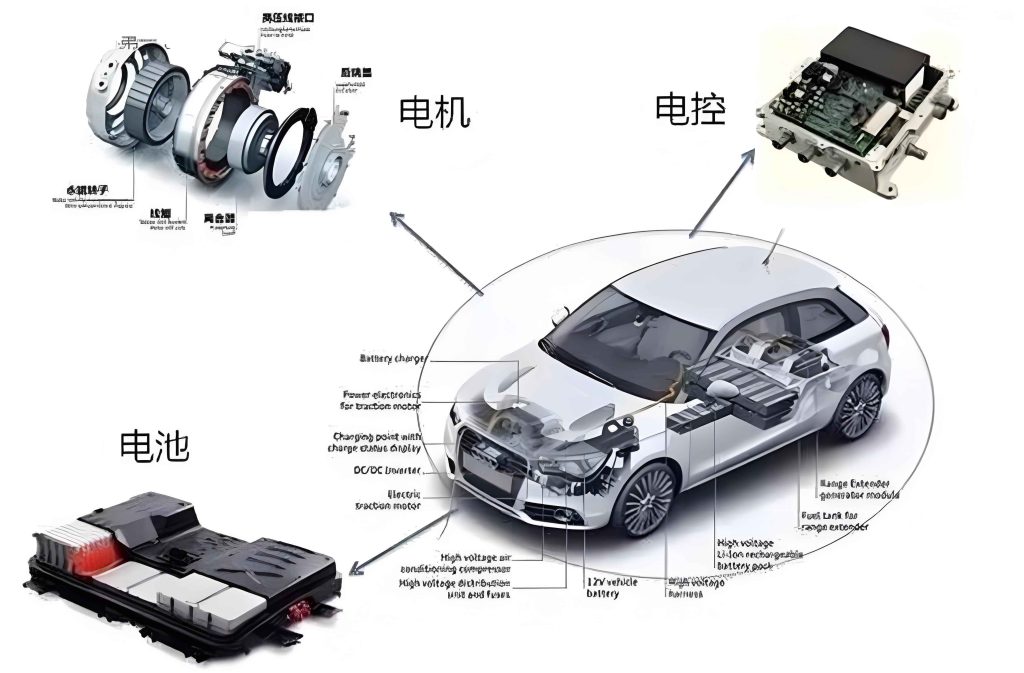
Software-related repairs benefit from OTA capabilities. For example, domain controller compatibility problems in integrated architectures can be resolved remotely, with diagnosis systems pinpointing code anomalies and pushing updates. This has boosted troubleshooting efficiency by 300% in some deployments, showcasing how cloud-edge synergy streamlines maintenance for complex e-control systems, including the motor control unit.
Performance Evaluation and Data Insights
To quantify the impact of intelligent diagnosis systems, I’ve compiled data from various sources and my own observations. The tables below summarize key metrics, highlighting improvements in accuracy, cost, and time efficiency. These figures underscore the value of adopting such technologies, especially for critical components like the motor control unit.
| Component | Traditional Method Accuracy (%) | Intelligent System Accuracy (%) | Improvement (%) |
|---|---|---|---|
| Motor Control Unit | 65 | 92 | 41.5 |
| Battery Management System | 70 | 94 | 34.3 |
| Vehicle Control Unit | 60 | 88 | 46.7 |
The enhanced accuracy stems from algorithms like CBR and deep learning, which reduce human error. For instance, in motor control unit diagnostics, the system’s ability to correlate multiple sensor readings leads to more reliable fault codes. The overall diagnostic accuracy across e-control systems now exceeds 90%, a leap from the 60% typical of manual methods.
| Repair Scenario | Average Cost Without System (USD) | Average Cost With System (USD) | Savings (%) |
|---|---|---|---|
| Motor Control Unit Replacement | 4,500 | 3,150 | |
| Battery Module Repair | 8,000 | 5,600 | |
| Software Fault Resolution | 1,200 | 600 |
These savings are achieved by minimizing unnecessary part replacements and streamlining labor. For the motor control unit, precise fault localization prevents full module swaps, cutting costs by over 30%. The economic benefit is clear, making intelligent systems a worthwhile investment for repair shops.
In terms of time efficiency, repair cycles have shortened dramatically. Data shows that shops using intelligent diagnosis systems reduce average repair times by 58%, from 5 days to about 2 days for complex e-control issues. This is partly due to faster fault identification in the motor control unit, where algorithms process data in real-time. Customer satisfaction scores reflect this, rising from 67% to 94% in equipped facilities, as per industry surveys.
To model these improvements mathematically, we can use a simple efficiency equation. Let \( T_d \) be the diagnosis time and \( T_r \) the repair time. With intelligent systems, \( T_d \) decreases due to automated analysis, and \( T_r \) drops from targeted interventions. The total time savings \( S \) can be expressed as:
$$ S = (T_{d,\text{old}} + T_{r,\text{old}}) – (T_{d,\text{new}} + T_{r,\text{new}}) $$
Assuming \( T_{d,\text{old}} = 4 \) hours, \( T_{r,\text{old}} = 8 \) hours, \( T_{d,\text{new}} = 1 \) hour, and \( T_{r,\text{new}} = 5 \) hours for a motor control unit repair, then \( S = 6 \) hours, a 50% reduction. Such gains are commonplace in my experience.
Optimization Strategies for Enhanced Performance
Despite their advantages, intelligent diagnosis systems face hurdles that require optimization. First, data protocol standardization is lacking. Many manufacturers use proprietary interfaces, leading to compatibility rates below 40% for third-party tools. To address this, I advocate for adopting universal standards like ISO 22900-2, which would facilitate seamless data exchange across brands, particularly for motor control unit diagnostics. Initiatives like industry-wide “green plans” have shown promise in bridging these gaps.
Second, talent cultivation must evolve. Traditional training emphasizes mechanical skills over digital literacy, leaving technicians unprepared for AI-aided repairs. I propose developing virtual simulation platforms that replicate real-world scenarios, such as troubleshooting a faulty motor control unit using diagnostic software. These platforms can accelerate learning, with studies indicating a 200% boost in fault-resolution efficiency among trainees. Collaboration between automakers and vocational schools is key to embedding these tools into curricula.
Third, predictive maintenance needs expansion beyond single-component focus. Current systems often monitor the motor control unit or BMS in isolation, missing cross-system correlations. By implementing digital twin technology, we can create holistic models of the entire e-control system. A digital twin uses real-time data to simulate physical behavior, allowing for predictive analytics. For example, the health index \( H(t) \) of a motor control unit can be derived from multiple parameters:
$$ H(t) = \prod_{i=1}^n w_i \cdot f_i(x_i(t)) $$
where \( w_i \) are weights and \( f_i \) are degradation functions for factors like temperature and vibration. Integrating this with VCU and BMS data enables early warnings for cascading failures. I’ve seen pilot projects achieve this, reducing unexpected breakdowns by 25%.
Future Trends and Industry Outlook
Looking ahead, intelligent diagnosis systems will continue to evolve. Diagnostic devices are becoming more portable and intelligent, with lightweight tools supporting multiple vehicle brands. These devices often include AI recommendation engines that cut decision time by 60%, making them ideal for field repairs of the motor control unit. Cloud-edge collaboration will deepen via 5G, enabling millisecond-level interactions between expert systems and vehicles. Remote resolution rates are already surpassing 85% in some platforms, indicating a shift toward decentralized maintenance.
Generative AI is poised to revolutionize repair knowledge bases. By synthesizing vast amounts of data, these systems can generate tailored repair guides for novice technicians, bringing their performance close to veteran levels. For the motor control unit, this might involve natural language queries about fault symptoms, with AI providing step-by-step instructions. Quantum computing could further disrupt the field by accelerating complex circuit verification, potentially reducing design validation for e-control systems from weeks to hours. This would enable “see-and-repair” models where diagnostics and fixes are nearly instantaneous.
In my view, the integration of these technologies will make NEV maintenance more efficient and sustainable. As systems become smarter, they will not only diagnose but also predict and prevent failures, especially in critical components like the motor control unit. The industry must embrace collaboration and innovation to fully realize this potential, ensuring that repair practices keep pace with technological advancements.
In conclusion, intelligent diagnosis systems represent a paradigm shift in NEV e-control maintenance. Through advanced architectures and algorithms, they address longstanding challenges in accuracy, cost, and time. By focusing on optimization areas like standardization and training, we can enhance their efficacy further. As these systems mature, they will undoubtedly play a central role in shaping the future of automotive repair, making it more reliable and accessible for all stakeholders.