
As a professional in automotive repair, I have extensively studied the intricacies of electronically controlled engine ignition systems. These systems are pivotal for modern vehicle performance, efficiency, and safety. In this article, I will delve into common fault symptoms, their root causes, and systematic diagnostic approaches, emphasizing the role of the motor control unit. I aim to provide a comprehensive guide that leverages tables, formulas, and practical insights to enhance diagnostic accuracy and speed.
The ignition system in an electronically controlled engine is a complex network involving sensors, actuators, and the motor control unit. The motor control unit orchestrates ignition timing, spark duration, and energy delivery based on inputs from various sensors. When faults occur, they manifest as performance issues that can compromise vehicle operation. Understanding these faults requires a deep dive into both theoretical principles and hands-on diagnostic techniques.
Common fault symptoms often stem from disruptions in the ignition sequence. Below, I summarize key symptoms and their potential causes in a table format, which helps in quick reference during diagnostics.
| Symptom | Potential Causes | Related Components |
|---|---|---|
| Intermittent engine power loss or stalling | Incorrect ignition timing, unstable voltage supply, faulty spark plugs, motor control unit calibration errors | Motor control unit, spark plugs, ignition coils, sensors |
| Engine shaking or vibration | Uneven spark distribution, misfires due to spark plug degradation, ignition coil irregularities, motor control unit signal distortions | Spark plugs, ignition coils, motor control unit, wiring harness |
| Ignition coil failure | Overheating, voltage spikes, wear and tear, motor control unit output anomalies | Ignition coils, motor control unit, power supply circuits |
| Difficulty starting the engine | Insufficient spark energy, faulty crankshaft position sensor, motor control unit communication failures | Motor control unit, sensors, ignition modules |
To further analyze these symptoms, we can model the ignition system’s behavior mathematically. For instance, the voltage required for spark generation can be expressed using the formula for ignition coil output: $$V_{spark} = L \frac{di}{dt} + R i$$ where \(V_{spark}\) is the spark voltage, \(L\) is the coil inductance, \(R\) is the resistance, and \(i\) is the current. Faults often arise when parameters deviate from nominal values, which the motor control unit attempts to regulate. The motor control unit continuously adjusts ignition timing based on inputs like engine speed and load, calculated as: $$\theta_{ignition} = f(\omega, T, \alpha)$$ where \(\theta_{ignition}\) is the ignition advance angle, \(\omega\) is engine speed, \(T\) is torque demand, and \(\alpha\) is correction factors from sensors. Disruptions in these calculations by the motor control unit can lead to symptoms like intermittent power loss.
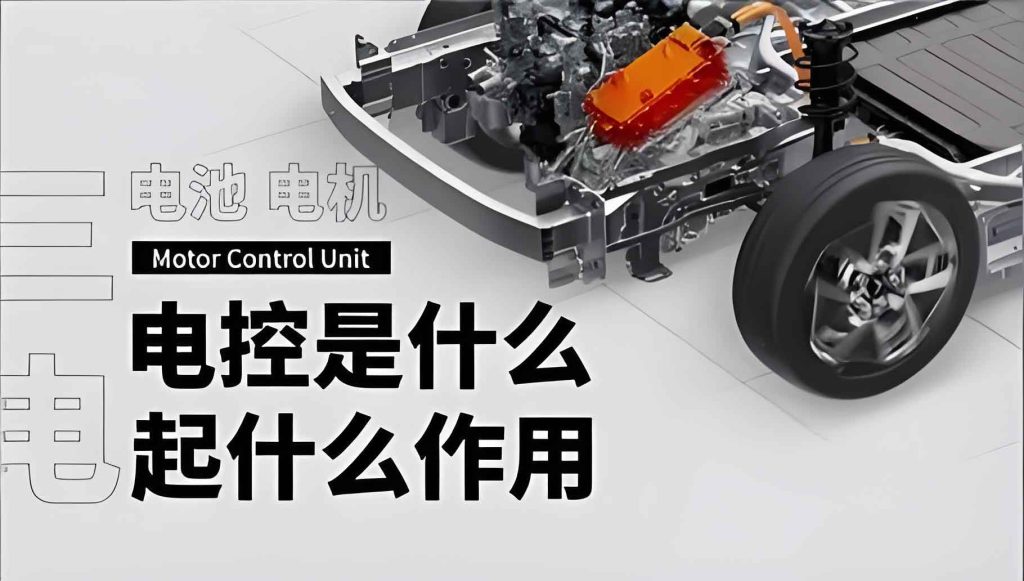
The motor control unit is central to ignition system operation, and its failure modes are critical to diagnose. For example, if the motor control unit receives erroneous data from oxygen sensors or knock sensors, it may retarded ignition timing, causing engine抖动. Similarly, software glitches in the motor control unit can lead to inconsistent spark delivery. I often emphasize the importance of verifying motor control unit integrity through diagnostic scans and waveform analysis.
Moving to systematic diagnosis, I employ a structured approach that includes fault diagnosis trees, signal waveform analysis, and module testing. Each method is detailed below with tables and formulas to aid implementation.
First, establishing a fault diagnosis tree helps narrow down potential causes. This logical structure starts with broad symptoms and branches into specific checks. For ignition system faults, the tree often begins with verifying spark presence and then progresses to motor control unit inputs and outputs. Here is a simplified representation in table form:
| Step | Diagnostic Action | Expected Outcome | If Abnormal, Check |
|---|---|---|---|
| 1 | Check for spark at spark plugs | Strong blue spark | Ignition coils, motor control unit signals |
| 2 | Scan motor control unit for error codes | No codes or relevant fault codes | Sensor circuits, motor control unit software |
| 3 | Measure voltage supply to ignition system | Stable 12V-14V | Battery, alternator, wiring to motor control unit |
| 4 | Test ignition coil primary and secondary resistance | Within manufacturer specifications | Replace coils; verify motor control unit commands |
This tree methodically isolates faults, often pointing to the motor control unit as a culprit if other components test normal. For instance, if sparks are weak but coils are functional, the motor control unit’s driver circuits might be failing.
Second, signal waveform analysis is invaluable for diagnosing electronic ignition systems. Using an oscilloscope, I capture voltage and current waveforms from key points, such as the ignition coil primary circuit or motor control unit output signals. Normal waveforms follow predictable patterns, while faults show distortions. For example, the primary voltage waveform for a healthy system can be modeled as: $$V_{primary}(t) = V_{battery} \cdot (1 – e^{-t/\tau})$$ during coil charging, and a rapid decay during spark discharge. Deviations, like excessive ringing or low amplitude, indicate issues with the motor control unit or coil drivers. Below is a table summarizing common waveform anomalies and their interpretations:
| Waveform Anomaly | Possible Cause | Impact on Motor Control Unit |
|---|---|---|
| Flat line or no signal | Open circuit in wiring, motor control unit failure | Motor control unit not sending ignition pulses |
| Excessive noise or spikes | Poor grounding, electromagnetic interference | Motor control unit signal corruption |
| Incorrect timing or duty cycle | Faulty sensors, motor control unit calibration errors | Motor control unit miscalculating ignition parameters |
By analyzing these waveforms, I can pinpoint whether the motor control unit is generating correct commands or if downstream components are at fault. This process often involves comparing measured waveforms against reference patterns stored in diagnostic software, which are derived from motor control unit specifications.
Third, module testing and replacement is a hands-on method to confirm faults. This involves sequentially testing each ignition system component—spark plugs, ignition coils, sensors, and the motor control unit—using multimeters, oscilloscopes, or specialized testers. For the motor control unit, I perform input-output tests by simulating sensor signals and monitoring responses. A key formula here is the expected voltage output from the motor control unit to the ignition coil: $$V_{output} = V_{ref} \cdot D$$ where \(V_{ref}\) is a reference voltage (e.g., 5V) and \(D\) is the duty cycle determined by the motor control unit. If measured values deviate, it suggests internal faults in the motor control unit. Below is a table outlining test procedures for critical modules:
| Module | Test Procedure | Nominal Values | Fault Indication |
|---|---|---|---|
| Spark Plugs | Measure resistance and inspect electrodes | 500-5000 ohms; clean electrodes | High resistance or fouling; replace if faulty |
| Ignition Coils | Test primary/secondary resistance and insulation | Primary: 0.5-2 ohms; Secondary: 5000-15000 ohms | Out-of-range values; coil replacement needed |
| Motor Control Unit | Scan for codes, test power and ground circuits, simulate inputs | Stable power supply, correct signal outputs | Error codes, no output signals; reprogram or replace motor control unit |
| Crankshaft Position Sensor | Measure AC voltage output while cranking | 0.5-3V AC, depending on engine speed | No signal; sensor replacement required, affecting motor control unit timing |
In practice, I often combine these methods. For example, if waveform analysis shows irregular ignition pulses, I might test the motor control unit’s output drivers directly. The motor control unit’s health is paramount, as it integrates data from multiple sources to optimize ignition. Recurrent faults might indicate underlying issues with the motor control unit’s firmware or hardware, necessitating updates or replacements.
To deepen the discussion, let’s explore some advanced diagnostic scenarios. Consider an engine with intermittent stalling: using the fault tree, I first check sparks and find them inconsistent. Waveform analysis reveals that the motor control unit’s output to the ignition coils fluctuates under load. This could stem from voltage drops in the motor control unit’s power supply, modeled as: $$V_{MCU} = V_{battery} – I \cdot R_{wiring}$$ where \(I\) is current draw and \(R_{wiring}\) is resistance in the wiring harness. If \(V_{MCU}\) falls below a threshold (e.g., 10V), the motor control unit may reset or malfunction, causing stalls. Testing the wiring and battery confirms this, and repairing the circuit resolves the issue, highlighting the motor control unit’s sensitivity to electrical stability.
Another common issue is engine抖动 due to misfires. Here, I use waveform analysis to compare ignition signals across cylinders. The motor control unit should deliver evenly spaced pulses, but if one cylinder shows delayed timing, it might indicate a faulty sensor or motor control unit processing error. The timing error \(\Delta t\) can be calculated: $$\Delta t = t_{actual} – t_{expected}$$ where \(t_{expected}\) is derived from motor control unit calculations. Large \(\Delta t\) values prompt further checks on sensors or motor control unit software calibration.
Throughout these processes, the motor control unit remains a focal point. Modern vehicles often have self-diagnostic capabilities in the motor control unit, but manual verification is crucial. I recommend regular scans of the motor control unit for fault codes, using OBD-II tools to retrieve data like ignition advance angles and misfire counts. This proactive approach can prevent major failures by addressing minor issues early.
In conclusion, diagnosing and troubleshooting ignition system faults in electronically controlled engines requires a methodical blend of theoretical knowledge and practical skills. By leveraging fault diagnosis trees, signal waveform analysis, and module testing, we can efficiently identify and resolve issues. The motor control unit plays a critical role in this ecosystem, and its proper functioning is essential for reliable engine performance. As technology evolves, continuous learning about motor control unit operations and diagnostic tools will empower automotive technicians to maintain vehicle safety and efficiency. This guide, enriched with tables and formulas, aims to serve as a robust resource for professionals in the field, ensuring that ignition system faults are addressed with precision and speed.