
I have followed the solid state cell transition for years, and the most important change I now observe is not a single chemistry breakthrough. It is a change in the questions that engineers, investors, automakers, and suppliers ask. Earlier, the central question was whether a solid state cell could work at all in a laboratory. Today, the central question is whether a solid state cell can be manufactured at automotive scale, validated under vehicle-level conditions, and sold at a cost that makes economic sense. That shift from scientific feasibility to industrial feasibility defines the current global race.
From my perspective, the solid state cell landscape is best understood as several races happening at once. There is a materials race among sulfide, oxide, halide, polymer, and composite electrolytes. There is a manufacturing race around dry rooms, sintering, stacking, pressure management, and yield. There is a validation race around cycle life, fast charging, low-temperature behavior, abuse tolerance, and pack integration. There is also a supply chain race around lithium metal, solid electrolyte powder, high-purity materials, and specialized equipment. The winners in the solid state cell race will not necessarily be the teams with the highest laboratory conductivity. They will be the teams that can combine chemistry, process, equipment, and supply chain into a repeatable product.
I see the global competition forming around three broad strategic styles. First, China is leveraging a complete lithium-ion supply chain to commercialize semi-solid architectures first, then iterate toward higher solid content and eventually all-solid designs. Second, Japan and South Korea are concentrating on all-solid frontier technologies, especially sulfide-based solid state cell platforms, with the aim of creating a technology gap. Third, the United States and Europe are pursuing a mixture of startup innovation, automotive partnerships, and public funding, often targeting premium, defense, aerospace, or specialty applications before mass-market vehicles. Each style has different strengths and weaknesses, and each will shape the timing of the solid state cell market.
When I evaluate a solid state cell, I begin with the electrolyte because it controls the ion transport pathway and the interface chemistry. The ideal solid electrolyte must conduct ions quickly, block electrons, remain stable against both the cathode and the anode, resist dendrite penetration, survive thermal cycling, and be manufacturable in thin, uniform layers. No single material family satisfies all these requirements today. The industry therefore pursues multiple routes in parallel, and I expect this parallel exploration to continue through the late 2020s.
| Family | Typical strength | Main weakness | Interface challenge | Manufacturing challenge | Near-term role in solid state cell |
|---|---|---|---|---|---|
| Sulfide | Very high ionic conductivity, soft mechanical behavior, good processability | Moisture sensitivity, hydrogen sulfide release risk, narrow stability window | Interfacial reactions with high-voltage cathodes and lithium metal | Dry room, protective coatings, pressure control, gas management | Leading all-solid candidate for premium and high-energy solid state cell platforms |
| Oxide | Good chemical and thermal stability, wide electrochemical window in some compositions | High grain-boundary resistance, brittleness, high sintering temperature | Poor solid-solid contact, lithium dendrite growth along boundaries | High-temperature sintering, thin-film uniformity, cracking | Used in composites, separators, and semi-solid solid state cell designs |
| Halide | High voltage stability, good mechanical properties, promising ionic conductivity | Moisture sensitivity, cost, limited large-scale data | Anode interface stability and cathode compatibility | Powder synthesis, dry processing, scalable coating | Emerging contender for high-voltage all-solid solid state cell designs |
| Polymer | Flexible, lightweight, easy to process, good interface wetting | Low room-temperature conductivity, oxidation limits | Lithium metal compatibility, dendrite growth at high current | Thin-film extrusion, roll-to-roll processing | Common in semi-solid and hybrid solid state cell concepts |
| Composite | Balances conductivity, flexibility, and stability | Complex phase control, inconsistent interfaces | Percolation pathways, contact loss during cycling | Mixing, dispersion, uniform curing | Practical bridge for semi-solid and early all-solid solid state cell products |
I use several basic relationships to compare solid state cell materials. The ionic conductivity of an electrolyte can be expressed through the Nernst-Einstein relation:
$$
\sigma = \frac{N q^2 D}{k_B T}
$$
Here, \(\sigma\) is ionic conductivity, \(N\) is carrier concentration, \(q\) is carrier charge, \(D\) is the diffusion coefficient, \(k_B\) is the Boltzmann constant, and \(T\) is absolute temperature. This equation reminds me that high conductivity is not only a function of mobile ion concentration. It also depends on how quickly those ions move through the solid lattice or amorphous network. A solid state cell with high carrier concentration but low diffusion still fails at practical current densities.
The temperature dependence of ionic conductivity is often described by an Arrhenius relationship:
$$
\sigma(T) = \sigma_0 \exp\left(-\frac{E_a}{k_B T}\right)
$$
In this expression, \(\sigma_0\) is a pre-exponential factor and \(E_a\) is the activation energy for ion transport. Lower activation energy is critical for solid state cell performance at low temperature. If a solid electrolyte has excellent conductivity at elevated temperature but poor conductivity near freezing, it will struggle in real vehicles, drones, or outdoor equipment. I therefore pay close attention to activation energy, not only room-temperature conductivity.
Diffusion length also matters because solid state cell interfaces are planar and often rigid:
$$
L = \sqrt{D t}
$$
Here, \(L\) is diffusion length, \(D\) is diffusivity, and \(t\) is time. In a solid state cell, slow diffusion can create concentration gradients near the interface, increase overpotential, and trigger decomposition. The rigid solid-solid contact means that even small volume changes can break the percolation network. This is why stack pressure and mechanical compliance are recurring themes in solid state cell engineering.
I also compare the electrochemical stability window of the electrolyte:
$$
E_g = E_c – E_a
$$
In this simplified form, \(E_g\) is the stability window, \(E_c\) is the cathodic limit, and \(E_a\) is the anodic limit. A wide window allows the solid state cell to pair a high-voltage cathode with a low-potential anode, such as lithium metal. However, a wide window measured in a static cell does not guarantee kinetic stability. Interfacial reactions can still occur slowly, consuming the solid state cell over hundreds or thousands of cycles. This is one reason why promising materials sometimes fail after scale-up.
When I consider the anode, I see three main paths for the solid state cell. The first is graphite or silicon-based anode with a solid electrolyte, which offers incremental gains but does not fully unlock lithium metal. The second is silicon-dominant anode, which can raise energy density substantially but suffers large volume expansion. The third is lithium metal, which offers the highest theoretical energy but creates dendrite, interface, and safety challenges. The volume change of silicon is especially severe:
$$
\Delta V = \frac{V_{\text{charged}} – V_{\text{discharged}}}{V_{\text{discharged}}}
$$
For silicon-rich anodes, \(\Delta V\) can be several hundred percent. In a liquid-electrolyte cell, some of this expansion is accommodated by the electrolyte and separator. In a solid state cell, the rigid interface can lose contact, crack the electrolyte, or build excessive stack pressure. I therefore view silicon anode development and solid state cell development as linked, but not identical. A solid state cell may use silicon to avoid lithium metal, or it may use lithium metal to maximize energy density. Each choice changes the manufacturing process and the pack design.
| Attribute | Semi-solid solid state cell | All-solid solid state cell |
|---|---|---|
| Electrolyte | Gel, polymer-rich, or mixed solid-liquid phase | Inorganic, polymer, or composite solid electrolyte with no liquid phase |
| Energy density potential | Moderate to high, often limited by liquid content and separator | Very high, especially with lithium metal and high-voltage cathode |
| Manufacturing compatibility | High, often leverages existing lithium-ion equipment | Lower, requires new dry rooms, stacking, sintering, and pressure control |
| Interface behavior | Better wetting, easier contact, but still prone to decomposition | Rigid contact, high interface resistance, sensitive to volume change |
| Safety | Improved over liquid electrolyte, but not inherently non-flammable | Potentially safer, but lithium dendrites and thermal runaway still possible |
| Commercial timing | Near-term, premium electric vehicles, consumer devices, specialty systems | Later, small-volume launch first, mass scale dependent on cost and yield |
| My view | Practical bridge that funds learning and scale | Long-term prize that requires materials, process, and supply chain convergence |
I believe the semi-solid solid state cell is not a distraction. It is a commercial bridge. It allows manufacturers to learn how to handle high-solid-content electrodes, thin electrolyte layers, and new pack designs while still using part of the existing lithium-ion supply chain. The semi-solid solid state cell also gives customers a product they can buy earlier, which creates revenue and field data. That field data is essential because laboratory cycling cannot fully predict real-world behavior. Temperature gradients, vibration, fast charging, and abuse conditions all affect the solid state cell in ways that are difficult to simulate.
However, I do not think semi-solid can remain the end state forever. If a solid state cell still contains a significant liquid fraction, it inherits some of the safety and degradation mechanisms of conventional lithium-ion cells. The liquid can react with the anode, generate gas, and contribute to thermal runaway. The solid state cell promise is strongest when the liquid content approaches zero. That is why the all-solid solid state cell remains the long-term target, even if semi-solid products arrive first.
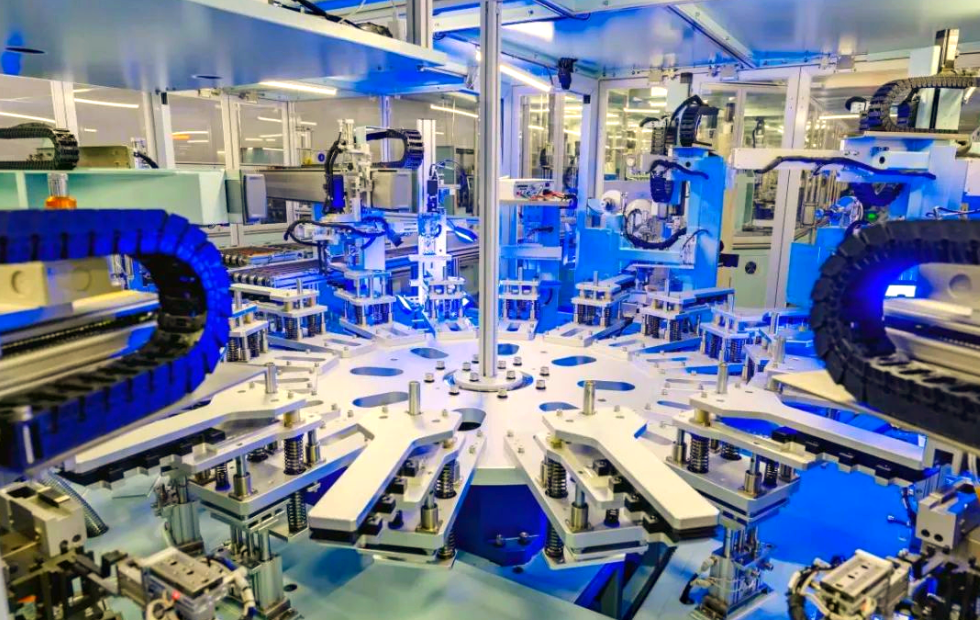
Manufacturing is where I see the greatest gap between solid state cell demonstrations and solid state cell products. A laboratory coin cell may use a thick electrolyte pellet, high stack pressure, and hand assembly. A vehicle pack needs thin, large-area layers, high speed, low defect rates, and uniform pressure across thousands of cells. The process window is narrow. I often summarize the challenge with a yield-aware cost equation:
$$
C_{\text{effective}} = \frac{C_{\text{input}}}{Y}
$$
Here, \(C_{\text{effective}}\) is the effective cost per good unit, \(C_{\text{input}}\) is the cost of materials and processing, and \(Y\) is yield. In a solid state cell line, yield can be limited by pinholes, cracks, delamination, contamination, and uneven pressure. If yield is low, even a cheap material becomes expensive. I therefore track pilot-line yield as closely as I track ionic conductivity. A solid state cell with 10 mS/cm conductivity but 20 percent yield is not a commercial product.
| Process step | Purpose | Common bottleneck | Metric I watch |
|---|---|---|---|
| Powder synthesis | Produce solid electrolyte with controlled composition and particle size | Impurities, moisture, batch variation | Purity, particle size distribution, ionic conductivity |
| Slurry mixing | Combine electrolyte, binder, solvent, and conductive additives | Dispersion, agglomeration, solvent compatibility | Viscosity, uniformity, solid content |
| Coating | Form thin electrolyte and electrode layers | Pinholes, thickness variation, cracking | Wet thickness, dry thickness, defect density |
| Calendering | Increase density and reduce porosity | Brittle fracture, uneven density | Relative density, elasticity, surface roughness |
| Sintering | Densify oxide or composite electrolytes | High temperature, grain growth, interfacial reaction | Density, grain size, shrinkage, warpage |
| Stacking | Assemble cathode, electrolyte, and anode layers | Alignment, contamination, interface contact | Alignment tolerance, interface resistance |
| Pressing | Create intimate solid-solid contact | Pressure uniformity, cell damage | Stack pressure, densification, impedance |
| Packaging | Protect the solid state cell from moisture and oxygen | Sealing, thermal management, pressure retention | Leak rate, compression stability |
| Formation | Activate the cell and stabilize interfaces | Long time, high temperature, gas generation | First-cycle efficiency, impedance, gas volume |
Pressure is one of the most misunderstood variables in solid state cell design. A solid state cell often needs compression to maintain contact, but too much pressure can crack the electrolyte, deform the anode, or shorten pack life. The basic definition of pressure is simple:
$$
P = \frac{F}{A}
$$
Here, \(P\) is pressure, \(F\) is force, and \(A\) is area. In a solid state cell stack, the relevant pressure is not only the nominal value. It is the distribution of pressure across the active area. If the center of a large pouch cell receives more pressure than the edges, the solid state cell will age unevenly. This creates localized current density, lithium plating, and interface degradation. I therefore look for designs that maintain uniform pressure without adding excessive mass. A pack that needs a heavy steel compression frame may lose the energy density advantage of the solid state cell.
Densification is another key metric. I define relative density as:
$$
\rho_r = \frac{\rho}{\rho_{th}}
$$
Here, \(\rho\) is measured density and \(\rho_{th}\) is theoretical density. Higher \(\rho_r\) usually improves ionic conductivity and mechanical strength, but it can also increase brittleness. For oxide solid state cell electrolytes, sintering to high density often requires high temperature, which can react with the cathode or cause lithium loss. For sulfide solid state cell electrolytes, high temperature is less desirable because sulfides can decompose. This is why sulfide and oxide routes require different manufacturing strategies, even though both are called solid state cell technologies.
Isostatic pressing is one of the most promising tools I see for solid state cell scale-up. It applies pressure uniformly from all directions, which can densify complex, multi-layer stacks. Warm isostatic pressing can combine moderate temperature with uniform pressure, helping to close voids and improve interfacial contact. The process is not free. Equipment cost, cycle time, and fixture design matter. But for solid state cell architectures that use brittle electrolytes or thick electrodes, uniform pressing may be essential. I expect equipment suppliers and battery manufacturers to co-develop specialized pressing, stacking, and dry-room solutions.
Cost is the hardest constraint. I break the solid state cell cost stack into materials, processing, yield, and pack integration:
$$
C_{\text{kWh}} = \frac{C_{\text{materials}} + C_{\text{process}} + C_{\text{yield}} + C_{\text{pack}}}{E_{\text{usable}}}
$$
Here, \(C_{\text{kWh}}\) is cost per usable kilowatt-hour, and \(E_{\text{usable}}\) is usable energy. This equation shows why a high-energy solid state cell can tolerate a higher absolute cost. If the solid state cell doubles energy density but triples cost, the cost per kilowatt-hour still rises. The goal is not merely higher energy density. The goal is higher energy density at acceptable cost. I see three levers: cheaper materials, higher yield, and better pack integration. A solid state cell that requires a heavy thermal management system or a complex compression frame may lose its advantage at the pack level.
| Cost category | Main drivers | Near-term pressure | Long-term improvement path |
|---|---|---|---|
| Solid electrolyte material | Lithium, sulfur, phosphorus, halides, rare elements, synthesis energy | High because volumes are low and specifications are strict | Scale, lower-cost precursors, recycling, process simplification |
| Cathode material | High-nickel, high-voltage, coatings, particle size | Compatibility with solid electrolyte | Coating technology, composite cathodes, lower cobalt content |
| Anode material | Lithium metal, silicon, graphite, protective layers | Lithium metal foil cost and handling | Thin lithium, silicon composites, anode-free designs |
| Manufacturing | Dry room, sintering, pressing, stacking, formation | Low yield, high equipment depreciation | Higher speed, automation, inline metrology, yield learning |
| Pack integration | Compression, thermal management, battery management system | Pressure hardware adds mass and cost | Cell design that reduces stack pressure, integrated cooling |
| End-of-life | Recycling, material recovery, logistics | Immature solid state cell recycling | Design for disassembly, electrolyte recovery, closed-loop supply |
I also use a learning-curve equation to think about long-term cost:
$$
C(t) = C_0 \left(\frac{Q_t}{Q_0}\right)^{-\log_2 LR}
$$
Here, \(C(t)\) is cost at time \(t\), \(C_0\) is initial cost, \(Q_t\) is cumulative production, \(Q_0\) is initial cumulative production, and \(LR\) is learning rate. If the solid state cell industry achieves a 15 to 20 percent learning rate, costs can fall quickly after initial scale. But learning rates are not automatic. They require cumulative production, standardized designs, and supply chain competition. In the early phase, I expect solid state cell costs to remain high, especially for all-solid cells with lithium metal. Semi-solid solid state cell products may reach cost parity earlier because they share more equipment and materials with conventional lithium-ion.
Supply chain is another area where I see major differences among regions. China has a broad lithium-ion ecosystem, including cathode, anode, separator, electrolyte, equipment, and recycling. That ecosystem makes semi-solid solid state cell commercialization faster. Japan and South Korea have deep materials science and strong automotive partnerships, which help all-solid solid state cell development. The United States has a strong startup culture, advanced research institutions, and capital markets, but it lacks some midstream manufacturing capacity. Europe has a strong automotive base and regulatory push, but it also depends on imported materials and equipment. Each region is trying to build a solid state cell supply chain, but no region is fully self-sufficient today.
| Region | Primary strategy | Core strength | Main weakness | Solid state cell timing I expect |
|---|---|---|---|---|
| China | Semi-solid first, rapid iteration, scale manufacturing | Complete lithium-ion supply chain, cost control, large market | All-solid frontier materials still need maturation | Early semi-solid solid state cell commercialization, all-solid later |
| Japan | All-solid frontier, patent depth, automotive integration | Materials research, precision manufacturing, vehicle engineering | High cost, limited scale, dependence on new equipment | Premium all-solid solid state cell launch in small volumes |
| South Korea | All-solid scale-up with large battery makers | Battery manufacturing know-how, cell design, global customers | Material cost, supply chain concentration | Pilot and early commercial all-solid solid state cell production |
| United States | Startup innovation, automotive partnerships, public funding | Advanced R&D, capital, software and system integration | Midstream manufacturing gap, high labor and equipment cost | Specialty and premium solid state cell applications first |
| Europe | Regulatory push, automotive collaboration, local supply | Vehicle integration, safety standards, premium brands | Dependence on imported cells and materials | Early adoption in premium vehicles, slower mass scale |
Validation is the gate that many solid state cell claims must pass. A solid state cell can perform well in a single cell at constant temperature and low current. A vehicle pack must perform across temperature extremes, high-rate charging, vibration, humidity, and crash conditions. I track several metrics: coulombic efficiency, energy efficiency, capacity retention, impedance rise, gas generation, and abuse tolerance. Coulombic efficiency is defined as:
$$
\eta_C = \frac{Q_{\text{discharge}}}{Q_{\text{charge}}}
$$
For a solid state cell, \(\eta_C\) close to unity is necessary but not sufficient. A cell can have high coulombic efficiency and still lose capacity through impedance growth or contact loss. Energy efficiency is also important:
$$
\eta_E = \frac{\int V_{\text{discharge}} I_{\text{discharge}} dt}{\int V_{\text{charge}} I_{\text{charge}} dt}
$$
If a solid state cell has high interface resistance, it will need more voltage to charge and deliver less voltage on discharge. The result is lower energy efficiency and more heat. That heat must be managed by the pack, which adds cost and mass. I therefore see interface engineering as a system-level issue, not a materials-only issue.
Cycle life is another critical metric. I often model capacity fade with a power-law form:
$$
Q(n) = Q_0 \left(1 – \alpha n\right)^{\beta}
$$
Here, \(Q(n)\) is capacity after \(n\) cycles, \(Q_0\) is initial capacity, \(\alpha\) is a degradation coefficient, and \(\beta\) is an exponent that reflects the fade mechanism. In a solid state cell, \(\alpha\) can be influenced by interfacial reactions, while \(\beta\) can be influenced by mechanical damage. If the solid state cell develops cracks or delamination, capacity may fall quickly after an initial stable period. This is why pressure management and compliant interfaces are so important. A solid state cell that looks stable for 100 cycles may fail at 500 cycles if the mechanical contact degrades.
| Validation area | Key test | Why it matters | Common failure mode |
|---|---|---|---|
| Rate capability | Charge and discharge at multiple C-rates | Determines fast-charge performance | High interface resistance, lithium plating |
| Low-temperature operation | Performance at sub-zero conditions | Affects real-world usability | Low ionic conductivity, high activation energy |
| High-temperature stability | Storage and cycling at elevated temperature | Reveals parasitic reactions | Interfacial decomposition, gas generation |
| Cycle life | Hundreds to thousands of cycles | Determines warranty and cost | Contact loss, capacity fade, impedance rise |
| Calendar life | Rest at various states of charge | Predicts shelf and vehicle idle aging | Self-discharge, interface growth |
| Abuse tolerance | Overcharge, nail penetration, crush, thermal ramp | Ensures safety | Thermal runaway, short circuit, venting |
| Mechanical durability | Vibration, shock, pressure cycling | Protects pack integrity | Cracking, delamination, pressure loss |
| Manufacturing quality | Inline inspection, leak test, impedance mapping | Enables high yield | Pinholes, misalignment, contamination |
I do not accept the assumption that a solid state cell is automatically safe. Safety is a system property. A solid state cell can reduce flammable liquid content, which is a genuine advantage. But lithium metal can still react violently if a short circuit occurs. Sulfide electrolytes can generate hazardous gases when exposed to moisture. Oxide electrolytes can crack and create pathways for dendrites. The pack design, thermal management, and battery management system still matter. A solid state cell that passes a nail penetration test at the cell level may still fail at the pack level if heat cannot be removed or if adjacent cells are damaged.
Fast charging is another area where I expect solid state cell performance to vary widely. In a liquid-electrolyte cell, fast charging is limited by lithium plating and mass transport in the electrolyte. In a solid state cell, fast charging is limited by interfacial kinetics, constriction resistance, and mechanical stress. If the solid state cell has poor contact at the cathode-electrolyte interface, high current will create local overpotential. That overpotential can drive decomposition or dendrite growth. The result is a solid state cell that charges quickly when new but degrades rapidly after repeated fast charging. I therefore look for fast-charge data after hundreds of cycles, not only on fresh cells.
I also pay attention to the cathode side. High-nickel layered oxides are attractive for solid state cell products because they offer high capacity and high voltage. But they expand and contract during cycling. In a liquid cell, the electrolyte can accommodate some strain. In a solid state cell, the rigid interface may crack or lose contact. Coatings and composite cathodes can help, but they add cost and process steps. The cathode-electrolyte interface is therefore one of the most important battlegrounds in the solid state cell race. A solid electrolyte with excellent bulk conductivity can still fail if the cathode interface is unstable.
On the anode side, lithium metal is the most difficult but most rewarding option. Lithium metal has a very high theoretical capacity, which can significantly increase the energy density of a solid state cell. But lithium metal is reactive, creeps under pressure, and can form dendrites. The critical current density at which dendrites form depends on the solid electrolyte, interface roughness, temperature, and stack pressure. I use a simple relationship to describe the pressure effect on contact:
$$
P_{\text{stack}} = \frac{F_{\text{compression}}}{A_{\text{cell}}}
$$
If \(P_{\text{stack}}\) is too low, contact is poor and resistance is high. If \(P_{\text{stack}}\) is too high, the solid electrolyte may fracture or the lithium may creep into unwanted regions. The optimal pressure window may be narrow. This is why I believe solid state cell pack design must be co-developed with cell design. A cell that performs well in a rigid fixture may fail in a lightweight pack that cannot maintain pressure over life.
I see three commercial phases for the solid state cell. In the first phase, semi-solid solid state cell products enter premium electric vehicles, consumer electronics, and specialty applications. These products offer improved safety and energy density, but they still rely on part of the conventional supply chain. In the second phase, all-solid solid state cell products enter small-volume premium vehicles, aerospace, defense, and high-value industrial applications. These products demonstrate the technology but remain expensive. In the third phase, all-solid solid state cell products scale into mass-market vehicles, grid storage, and broader applications. The timing of this third phase depends on cost, yield, and supply chain maturity.
| Phase | Typical product | Cell architecture | Key customer | Main constraint |
|---|---|---|---|---|
| Phase 1 | Premium electric vehicle, consumer device, drone | Semi-solid solid state cell | Early adopters, specialty OEMs | Cost, field data, manufacturing yield |
| Phase 2 | Luxury vehicle, aerospace, defense | All-solid solid state cell with lithium metal or silicon | High-value buyers, government programs | Materials, stack pressure, cycle life |
| Phase 3 | Mass-market vehicle, energy storage | All-solid solid state cell with low-cost materials | Global automakers, grid operators | Cost parity, supply chain, recycling |
I also track the competitive dynamics between incumbents and startups. Incumbent battery makers have manufacturing experience, customer relationships, and supply chain power. Startups have agility, specialized intellectual property, and access to risk capital. In the solid state cell race, I see partnerships as essential. A startup may invent a solid electrolyte, but it needs an automaker to validate the cell and a equipment maker to scale the process. An automaker may design a solid state cell pack, but it needs a battery partner to manufacture cells at high yield. The winners will likely be ecosystems, not isolated companies.
I am often asked whether solid state cell technology will replace lithium-ion. My answer is that replacement will be gradual and segment-specific. Conventional lithium-ion will continue to improve, especially with silicon anodes, high-nickel cathodes, and better electrolytes. Semi-solid solid state cell products will compete in premium segments. All-solid solid state cell products will initially serve applications where high energy density or safety justifies a cost premium. Over time, as manufacturing scales and costs fall, the solid state cell will expand into more segments. But I do not expect a sudden switchover. I expect a layered transition.
One of the most important system-level metrics is pack energy density. I define it as:
$$
E_{\text{pack}} = \frac{E_{\text{cell}} \cdot N_{\text{cell}} \cdot \eta_{\text{pack}}}{m_{\text{pack}} + m_{\text{thermal}} + m_{\text{compression}}}
$$
Here, \(E_{\text{cell}}\) is cell energy, \(N_{\text{cell}}\) is cell count, \(\eta_{\text{pack}}\) is pack efficiency, \(m_{\text{pack}}\) is pack mass, \(m_{\text{thermal}}\) is thermal management mass, and \(m_{\text{compression}}\) is compression hardware mass. This equation is critical because a solid state cell may have excellent cell-level energy density but require heavy compression and thermal hardware. If \(m_{\text{compression}}\) is too large, the pack-level advantage shrinks. I therefore evaluate solid state cell designs at the pack level, not only at the cell level.
Thermal management is another system-level challenge. Solid state cell electrolytes may have different thermal conductivity than liquid electrolytes. Some sulfides and oxides are brittle and may not tolerate large temperature gradients. If the solid state cell operates at high current, heat generation at interfaces can create hot spots. The pack must spread heat and prevent thermal propagation. This may require new cooling plate designs, thermal interface materials, and cell spacing. I see this as an opportunity for engineering innovation, but also a source of cost and complexity.
| Tradeoff | One direction | Other direction | Consequence |
|---|---|---|---|
| Electrolyte thickness | Thinner electrolyte increases energy density | Thicker electrolyte improves mechanical strength and dendrite resistance | Need defect-free thin films or robust separators |
| Stack pressure | Higher pressure improves contact | Lower pressure reduces mass and stress | Narrow operating window, pack design challenge |
| Cathode loading | Higher loading increases energy density | Lower loading improves rate and uniformity | Tradeoff between energy and power |
| Anode capacity | Lithium metal maximizes energy | Silicon or graphite improves stability | Different safety and cycle life profiles |
| Operating temperature | Higher temperature improves conductivity | Lower temperature improves efficiency and life | Thermal management and material stability |
| Manufacturing speed | Faster lines reduce cost | Slower lines improve quality and yield | Need inline metrology and automation |
I also think about recycling and end-of-life from the beginning. A solid state cell contains valuable materials, including lithium, nickel, cobalt, and in some cases rare elements. The recycling process for solid state cell products may differ from conventional lithium-ion because the electrolyte is solid and the cell architecture may be different. If solid state cell packs are difficult to disassemble, recycling costs will rise. If materials cannot be recovered efficiently, the supply chain will remain constrained. I therefore see design for recycling as a competitive advantage in the solid state cell race. Companies that plan for material recovery early will have lower long-term costs and better sustainability profiles.
I use a simple circularity metric to compare designs:
$$
R_{\text{material}} = \frac{m_{\text{recovered}}}{m_{\text{input}}}
$$
Here, \(R_{\text{material}}\) is material recovery rate, \(m_{\text{recovered}}\) is recovered mass, and \(m_{\text{input}}\) is input mass. A high \(R_{\text{material}}\) reduces primary material demand and stabilizes cost. For solid state cell products, the recovery of solid electrolyte and lithium metal is not yet mature. I expect pilot recycling programs to emerge alongside pilot manufacturing lines. The companies that integrate recycling early may gain a cost advantage when volumes rise.
Another important factor is standards and regulation. A global solid state cell standard can accelerate adoption by defining test methods, safety requirements, and performance metrics. It can also reduce confusion among customers and investors. I see early standards activity as a positive signal because it forces the industry to agree on what a solid state cell is and how it should be tested. Without standards, companies can make claims that are not comparable. With standards, the solid state cell race becomes more transparent. I expect standards to evolve from semi-solid definitions to all-solid definitions, with separate tests for lithium metal anodes and high-voltage cathodes.
I also consider the role of artificial intelligence and digital tools in solid state cell development. AI can accelerate materials discovery, optimize electrolyte compositions, and predict interface stability. Digital twins can simulate manufacturing lines and pack behavior. Machine learning can analyze cycling data and identify degradation modes. These tools do not replace physical experiments, but they can reduce the number of experiments and shorten development cycles. In the solid state cell race, speed matters. A company that can iterate materials and processes faster will have an advantage. I therefore expect AI-driven materials platforms and automated laboratories to become more common.
The human factor is also important. Solid state cell development requires collaboration among materials scientists, electrochemists, mechanical engineers, manufacturing engineers, and supply chain experts. A breakthrough in the laboratory must be translated into a reproducible process. This translation is often the hardest part. I have seen many promising solid state cell materials fail because they could not be coated, stacked, or pressed at scale. The companies that build cross-functional teams early will be more successful. I emphasize this because the solid state cell race is not only a science race. It is an integration race.
I also track the flow of capital. Solid state cell startups have attracted significant investment, but capital alone does not guarantee success. The industry needs patient capital because scaling a solid state cell line takes time. It also needs strategic capital from automakers, equipment makers, and material suppliers. Strategic investors can provide testing facilities, pilot lines, and customer feedback. In my view, the most valuable solid state cell companies will be those that combine technical depth with manufacturing partnerships. A solid state cell company without a manufacturing partner may struggle to scale. A manufacturing partner without a strong solid state cell technology may fall behind.
I use a simple readiness score to compare solid state cell programs:
$$
S_{\text{readiness}} = w_1 M + w_2 P + w_3 Y + w_4 V + w_5 C
$$
Here, \(M\) is materials maturity, \(P\) is process maturity, \(Y\) is yield, \(V\) is validation depth, \(C\) is cost trajectory, and \(w_1\) through \(w_5\) are weights. Different applications assign different weights. For aerospace, validation and safety may dominate. For mass-market vehicles, cost and yield may dominate. This score helps me avoid overemphasizing a single metric such as ionic conductivity. A solid state cell program with excellent materials but poor yield is not ready for scale. A program with moderate materials but strong process and validation may be closer to commercialization.
| Dimension | Low readiness | Medium readiness | High readiness |
|---|---|---|---|
| Materials | Lab-scale powder, unstable interface | Pilot-scale powder, coatings under development | Qualified supply, stable interface, reproducible |
| Process | Coin cell, manual assembly | Pilot line, semi-automated | High-speed line, automated inspection |
| Yield | Below 50 percent | 50 to 80 percent | Above 90 percent for critical layers |
| Validation | Single-cell lab data | Module-level cycling and abuse tests | Pack-level vehicle validation |
| Cost | No clear path to parity | Learning curve visible | Cost model supports mass adoption |
I also think about the difference between energy density and power density. A solid state cell with high energy density may have lower power density because of interface resistance. For electric vehicles, both energy and power matter. A vehicle needs enough energy for range and enough power for acceleration and fast charging. A solid state cell that excels in one dimension but fails in the other may not satisfy customers. I therefore expect solid state cell designs to be tailored to specific applications. A premium sedan may prioritize energy density and fast charging. A commercial truck may prioritize cycle life and cost. An aerospace application may prioritize safety and specific energy. There will not be one solid state cell that wins everywhere.
I also consider the role of hybrid architectures. A solid state cell can be combined with a conventional lithium-ion cell in a dual-chemistry pack. The solid state cell provides high energy density or safety, while the lithium-ion cell provides power or cost. This approach can reduce risk and accelerate adoption. It also allows manufacturers to use existing battery management systems and pack designs. I see hybrid packs as a practical near-term strategy, especially for premium vehicles. Over time, as solid state cell costs fall, the balance may shift toward all-solid packs.
In my assessment, the global solid state cell race is not a single finish line. It is a series of milestones. The first milestone is a reliable semi-solid solid state cell in a production vehicle. The second is an all-solid solid state cell with acceptable cycle life in a premium vehicle. The third is an all-solid solid state cell with cost and yield suitable for mass-market vehicles. The fourth is a solid state cell supply chain that can support terawatt-hour scale. Each milestone requires different capabilities. A company that leads at one milestone may not lead at the next. This is why I expect the competitive landscape to remain dynamic through 2030 and beyond.
I also watch the interaction between solid state cell development and conventional lithium-ion improvement. If conventional lithium-ion improves faster than expected, the solid state cell window may narrow. If conventional lithium-ion hits safety or energy density limits, the solid state cell window may widen. I do not think conventional lithium-ion will stop improving. Silicon anodes, high-nickel cathodes, advanced separators, and safer electrolytes will continue to advance. Therefore, the solid state cell must offer a clear advantage, not just a theoretical one. It must be safer, denser, or cheaper in a way that matters to customers. Otherwise, it will remain a niche product.
I use a simple competitiveness condition for the solid state cell:
$$
\frac{C_{\text{solid state cell}}}{E_{\text{solid state cell}}} \lt \frac{C_{\text{conventional}}}{E_{\text{conventional}}}
$$
This inequality must hold at the pack level, not only at the cell level. If the solid state cell costs more per kilowatt-hour but enables a lighter pack, faster charging, or longer life, the system-level equation may still favor it. If the solid state cell requires expensive compression and thermal hardware, the advantage may disappear. I therefore evaluate the solid state cell as part of a complete vehicle or system, not as an isolated component.
I also see a strong link between solid state cell development and manufacturing equipment. Equipment makers that can provide dry-room processing, roll-to-roll coating, sintering, stacking, and isostatic pressing will be critical. In some cases, the equipment may be the bottleneck. A solid state cell design that requires a new machine with a long lead time will scale slowly. A solid state cell design that can use existing equipment will scale faster. This is one reason why semi-solid solid state cell products may arrive earlier. They are more compatible with current manufacturing infrastructure.
I expect the solid state cell supply chain to evolve in three layers. The first layer is raw materials, including lithium, sulfur, phosphorus, halides, nickel, cobalt, and manganese. The second layer is engineered materials, including solid electrolyte powder, coated cathodes, lithium metal foil, and composite anodes. The third layer is equipment and services, including dry rooms, sintering furnaces, pressing systems, metrology, and recycling. Each layer has different investment requirements and competitive dynamics. I see opportunities in all three layers, but I also see risks. A shortage in any layer can slow the entire solid state cell industry.
| Layer | Examples | Bottleneck risk | Strategic importance |
|---|---|---|---|
| Raw materials | Lithium, sulfur, phosphorus, halides, nickel, cobalt | Price volatility, geopolitical concentration | Cost and availability |
| Engineered materials | Solid electrolyte powder, coated cathode, lithium foil, composite anode | Quality, consistency, scale | Cell performance and yield |
| Equipment | Dry room, coater, calender, sintering furnace, press, stacker | Lead time, customization, cost | Manufacturing capacity |
| Services | Metrology, testing, certification, recycling | Immature standards, limited capacity | Trust and circularity |
I also think about the difference between cell-level and pack-level innovation. A solid state cell may be developed by a materials company or battery maker, but the pack is often designed by an automaker or system integrator. If the pack cannot maintain pressure, manage heat, or integrate the solid state cell safely, the advantage is lost. I therefore see a need for early collaboration between cell developers and pack engineers. This collaboration should start at the beginning of the solid state cell design, not after the cell is finalized. A solid state cell that is optimized only for cell-level performance may be difficult to integrate.
In my view, the solid state cell race will produce several winners rather than one. There will be winners in sulfide electrolytes, winners in oxide composites, winners in halide electrolytes, and winners in polymer hybrids. There will be winners in equipment, materials, and recycling. There will be winners in specific applications, such as premium vehicles, aerospace, or grid storage. The solid state cell market will be diverse because the requirements are diverse. I do not expect a single chemistry or a single company to dominate every segment. Instead, I expect a portfolio of solid state cell solutions tailored to different needs.
I also consider the possibility of setbacks. A high-profile solid state cell recall or safety incident could slow the entire industry. A manufacturing yield problem could delay commercialization by years. A raw material shortage could raise costs. A better conventional lithium-ion technology could reduce demand for solid state cells. These risks are real. I therefore do not assume a smooth path. I expect setbacks, consolidation, and strategic shifts. The companies that survive will be those that manage risk, learn quickly, and adapt their technology to market needs. The solid state cell race is a marathon with several hills.
My final view is that the solid state cell is moving from promise to engineering reality. The global competition is intense, and the pace of announcements is high. But the real progress will be measured in yield, cycle life, cost, and field data. I will continue to watch semi-solid solid state cell products as the first commercial wave. I will watch all-solid solid state cell pilots as the technology frontier. I will watch the supply chain and equipment ecosystem as the enabling layer. And I will watch standards and recycling as the foundation for long-term growth. The solid state cell race will not be won by a single breakthrough. It will be won by many small improvements that together make the solid state cell manufacturable, reliable, and affordable.
I believe the next few years will be decisive. The companies that can move from laboratory to pilot line, from pilot line to vehicle validation, and from vehicle validation to mass production will define the future of the solid state cell. The solid state cell is not just a battery chemistry. It is a new industrial system. It requires new materials, new equipment, new standards, and new partnerships. The global solid state cell race is therefore also a race to build that system. I remain optimistic about the long-term potential, but I remain disciplined about the near-term challenges. The solid state cell will arrive, but it will arrive in stages, and each stage will require different capabilities. That is the reality I see, and that is the reality I will continue to track.